
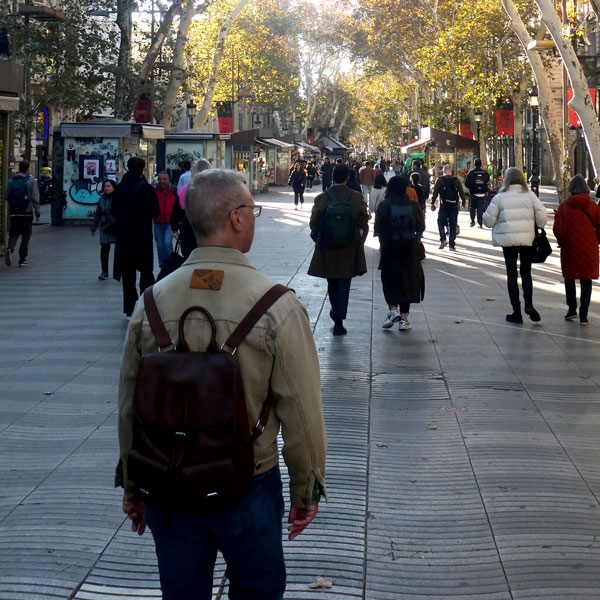
Today began like every day, with a hotel breakfast. And, being Spain, that includes a morning glass of cava. We had timed tickets to tour the Palau Güell at 10 AM just off Las Ramblas, so we joined what was largely a tourist crowd strolling down the “spine” of Barcelona.
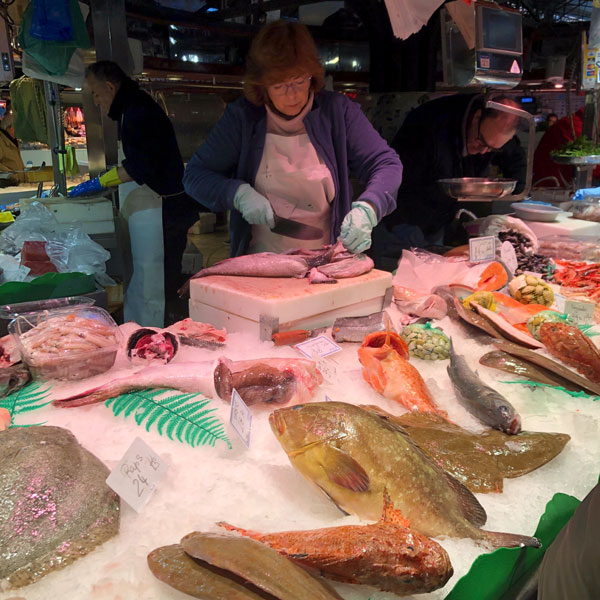
Since we were walking past it and had some time before our Palau Gúell tour, we decided to take a quick walk through the Boqueria market. Due to its fame as a tourist mecca, the place has obviously pivoted from being a fresh food market for locals to a collection of prepared food stalls vending ready-to-eat meals for sightseers. There were exceptions, such as the fishmonger shown to the left. But there was a very different vibe here versus the realness of the Mercat de Sant Antoni and the Mercat de Santa Caterina which are outside of most visitors’ primary stomping grounds.
The Palau Güell
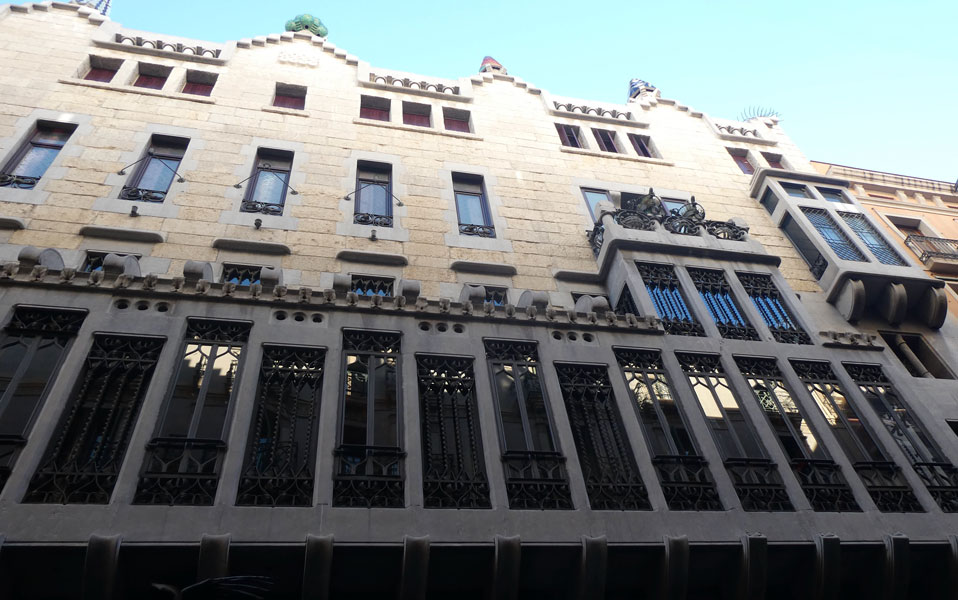
The Palau Güell is a mansion designed by Antoni Gaudi for the industrial tycoon Eusebi Güell. It was built in the late 1800s in the then somewhat sketchy El Raval neighborhood. However, Güell’s father’s home was there and the new mansion was built adjacent and connected to his father’s place. [As we learned more about the building, I could only think of the old realtor’s advice that one should never be the owner of the most expensive house on the block. And this was definitely the finest residence around.] Surprisingly, Gúell’s wife eventually found living in the house not to her liking and they moved out to Park Güell (which is Monday’s tour). Later, some family members reoccupied the house, living there until the Spanish Civil War broke out.
The Exterior:
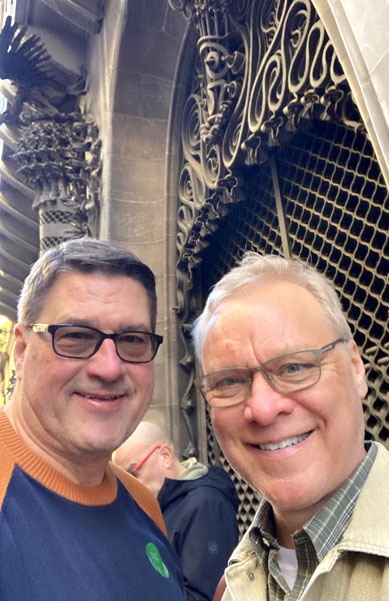
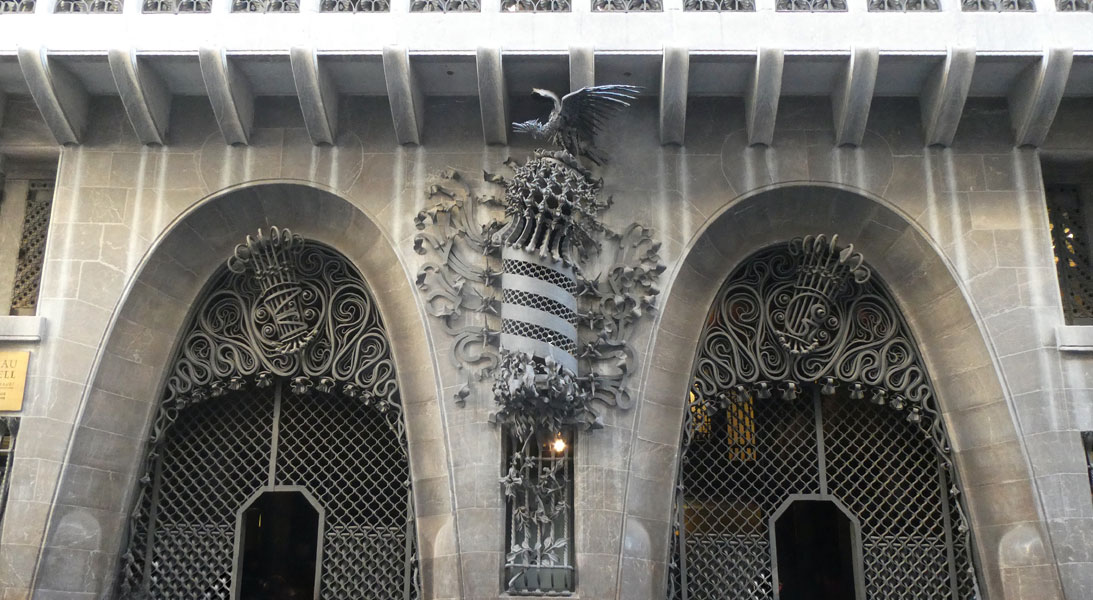
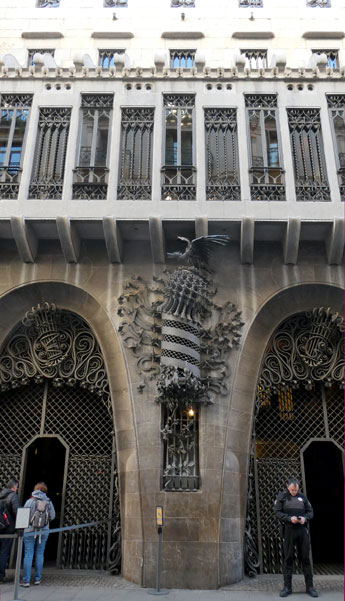
The facade is reminiscent of a Venetian palace. The two parabolic arches were the entry and exit doors for coaches bringing residents and visitors to the palace. Guests disembarked in a warm, dry space before climbing the stairs to the greeting rooms of the house. Carriages could be parked and the horses were led down a ramp to the under-house stables.
The Entryway:
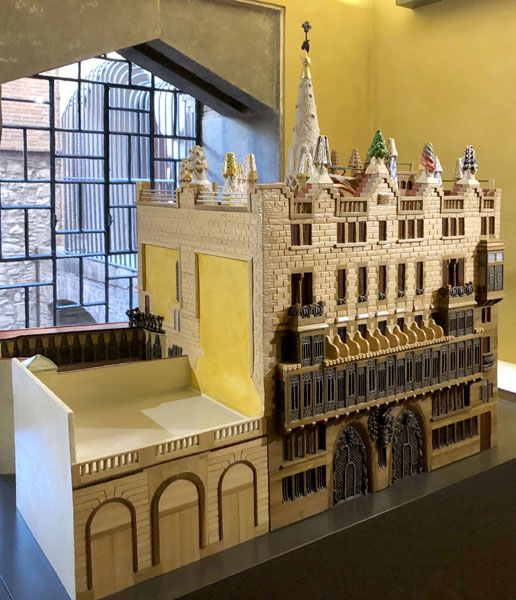
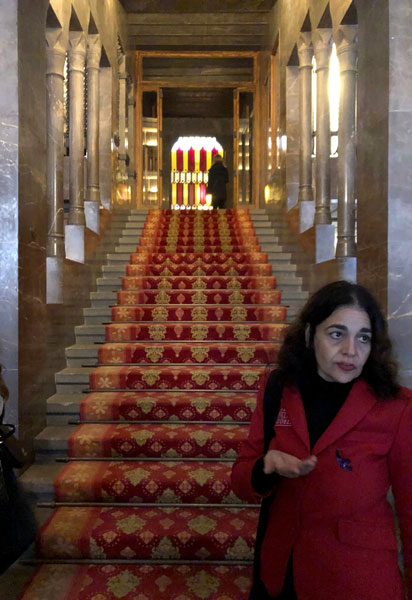
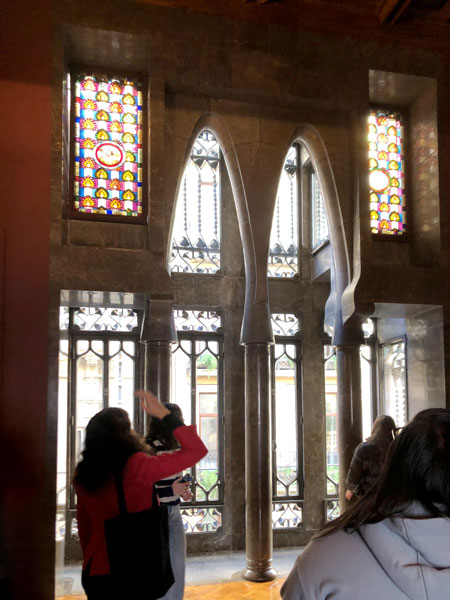
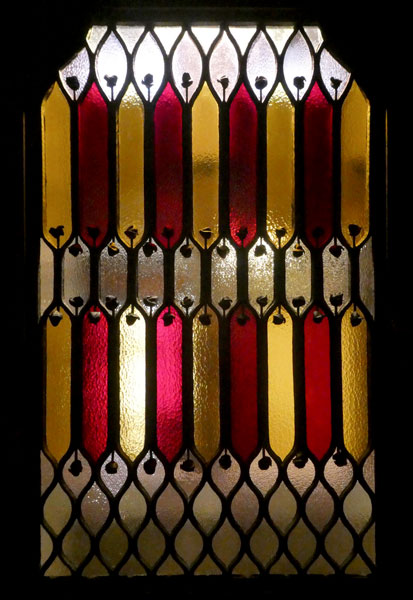
A model of the building is located at street level near to the gift shop and the ramps leading down to the stables. It provided a giant’s overview of the building we were about to explore. At the top of the grand staircase leading to the next level there is a stained glass window celebrating the Catalan flag of four red stripes on a yellow field. The interior arches frame the view of the street below.
Architectural Details:
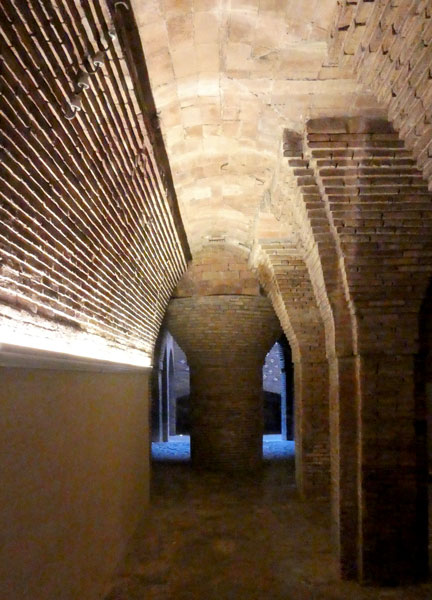
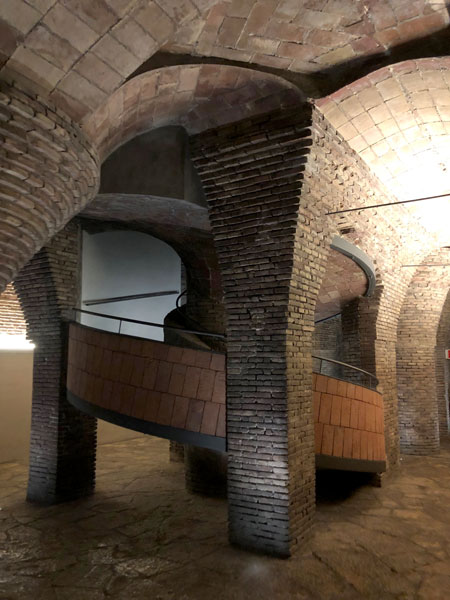
We were assaulted with many interesting design elements while navigating the maze of rooms and corridors that make up the house. I’m just gonna post a bunch of the more interesting things we spotted as we made our way to the roof, such as:
- The exposed brick stable beneath the house
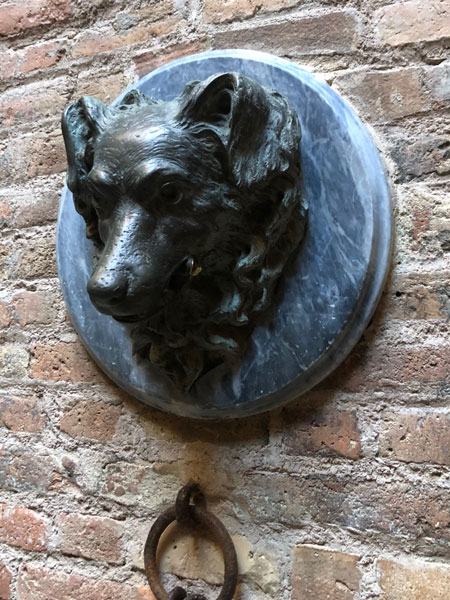
- One of the cast-iron tie-ups for horses
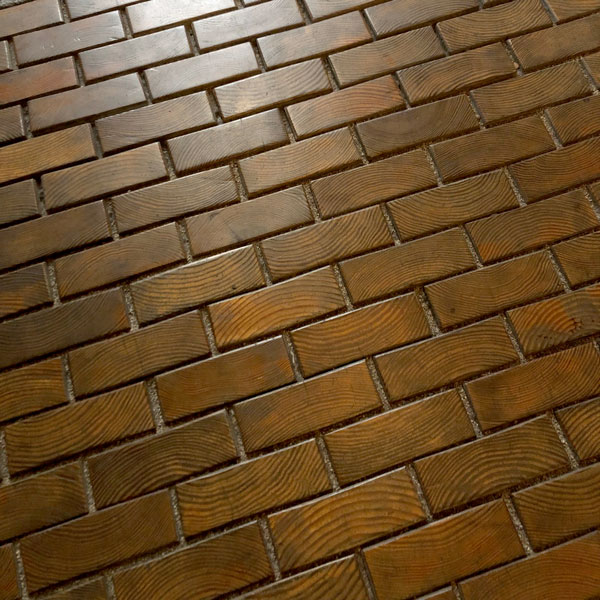
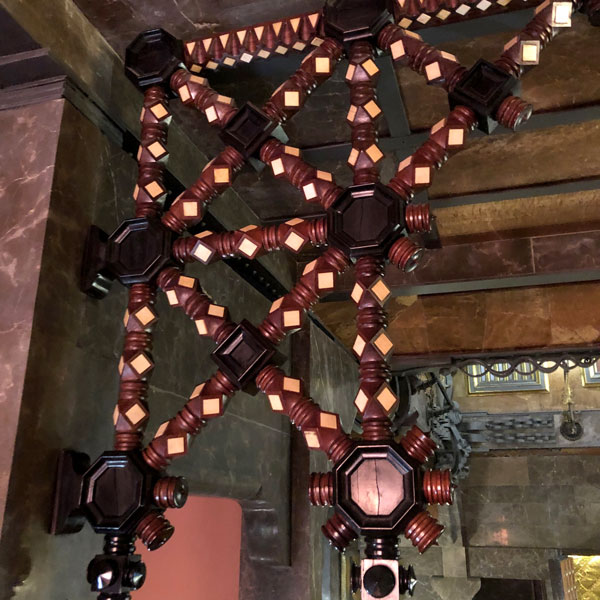
- Wooden “bricks” used to tile the floor
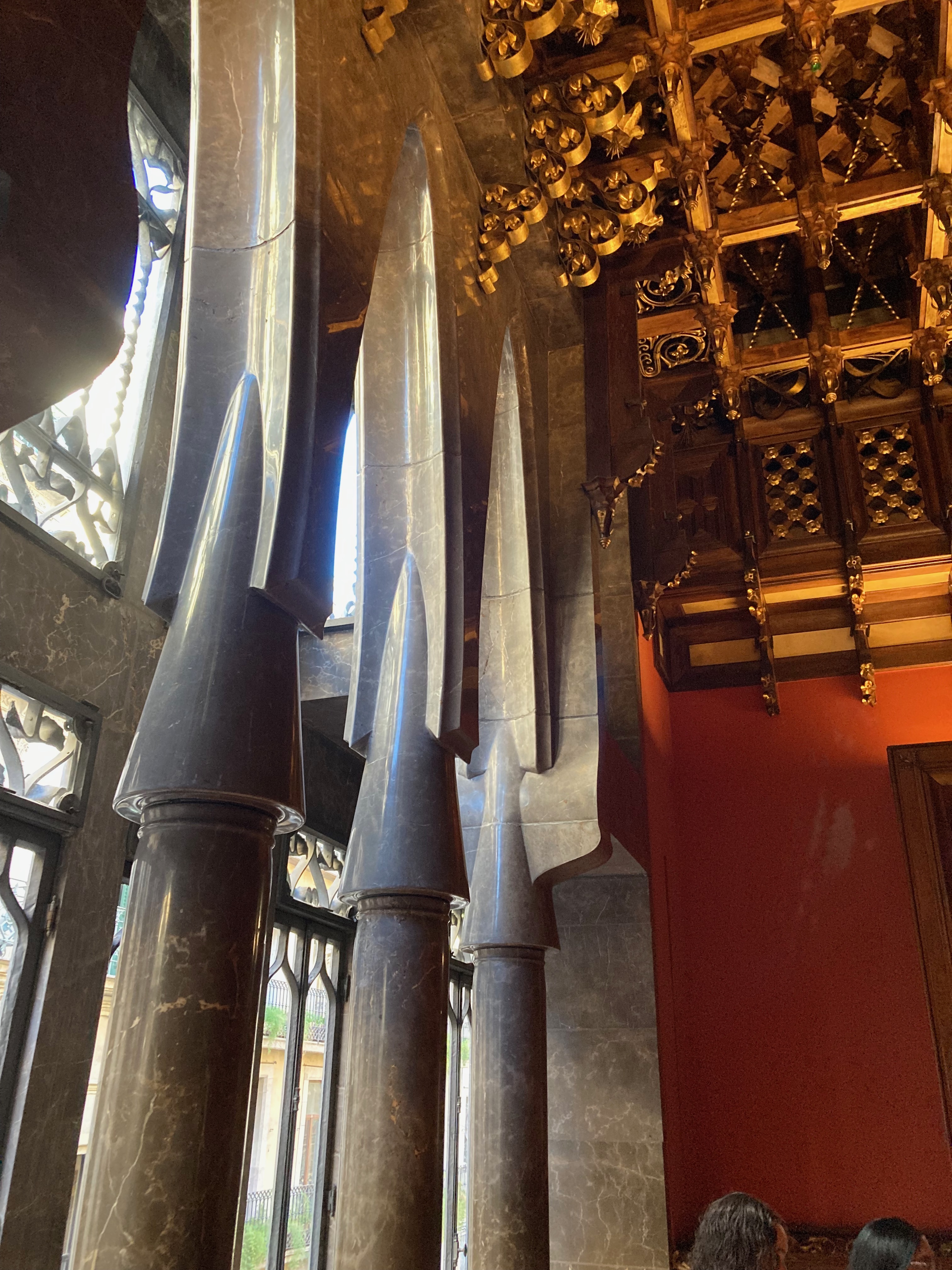
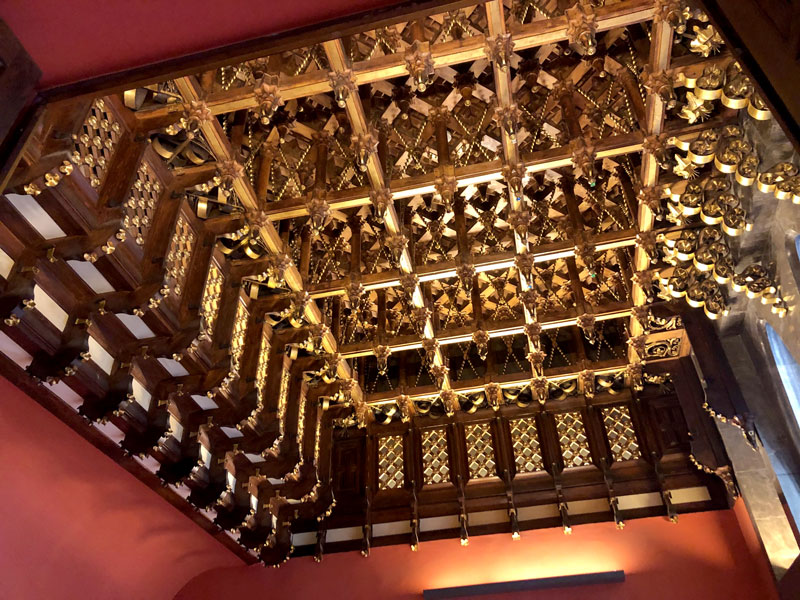
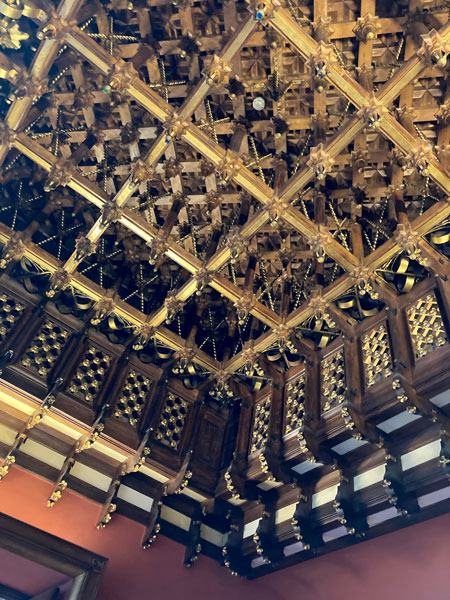
- Intricate ceiling and bracket work, carved and gilded
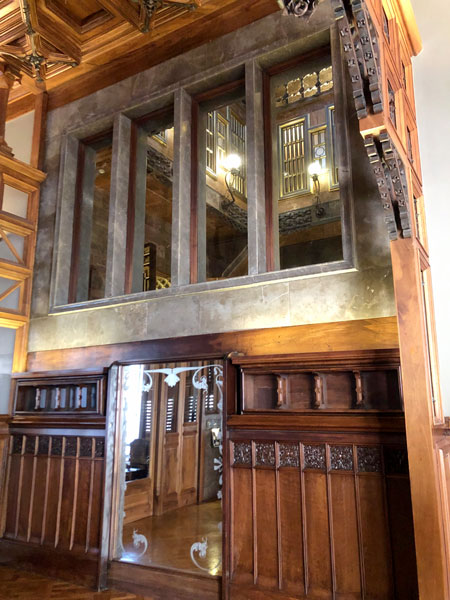
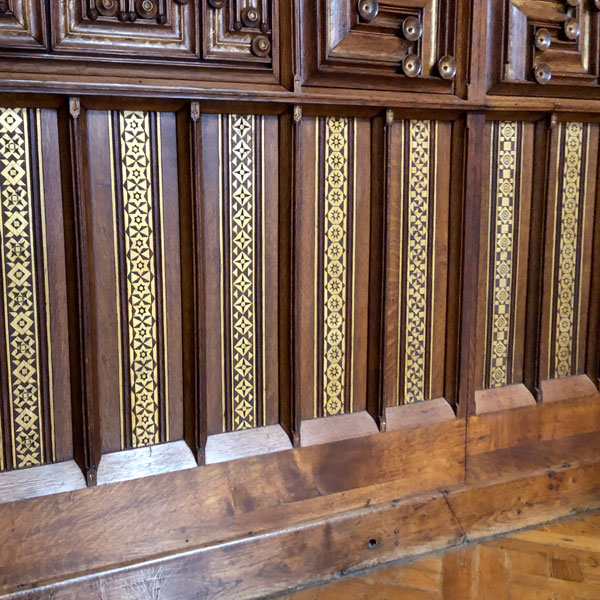
- Gold-leaf patterning on wood paneling
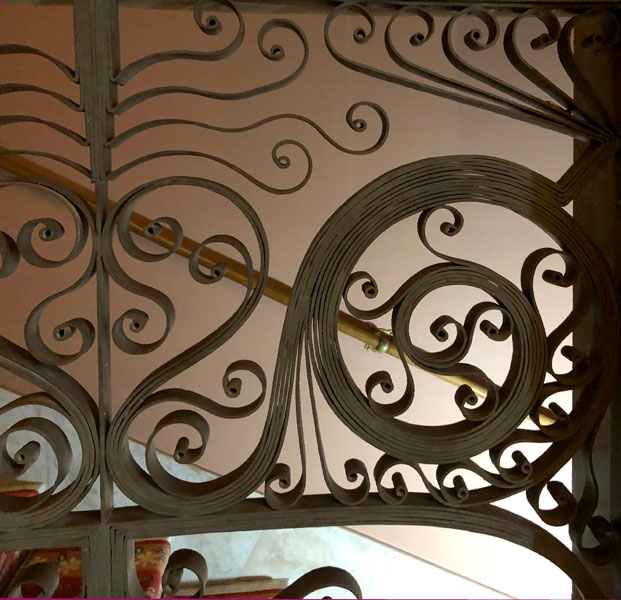
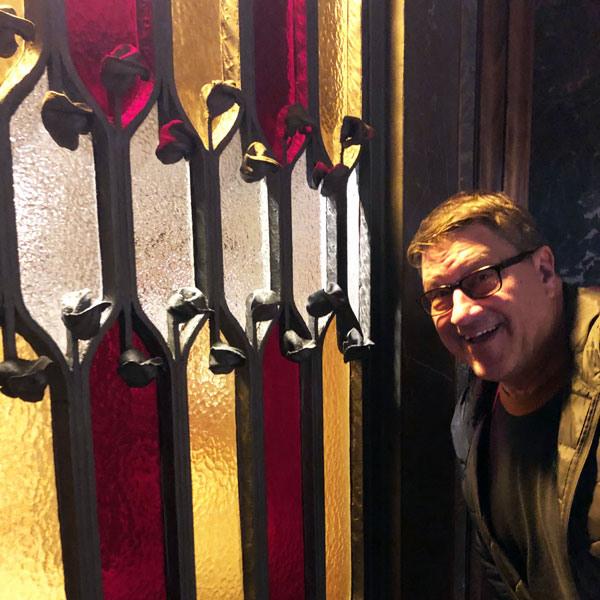
- Iron grating. Look carefully…many are one long piece of iron shaped to form
- The Catalan flag in stained glass with cast-iron decorative framing
Interior Rooms:
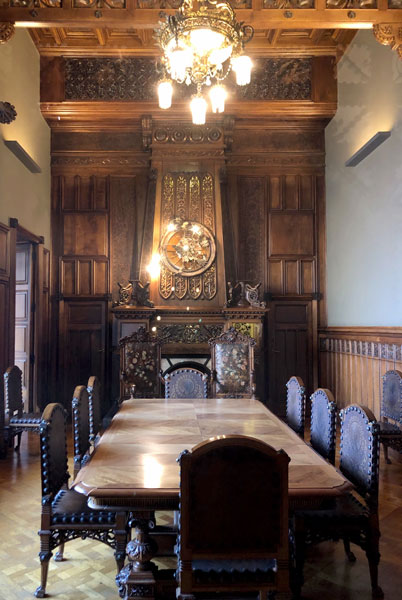
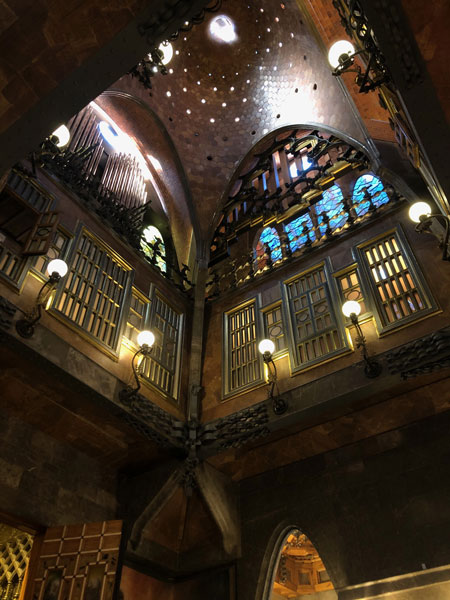
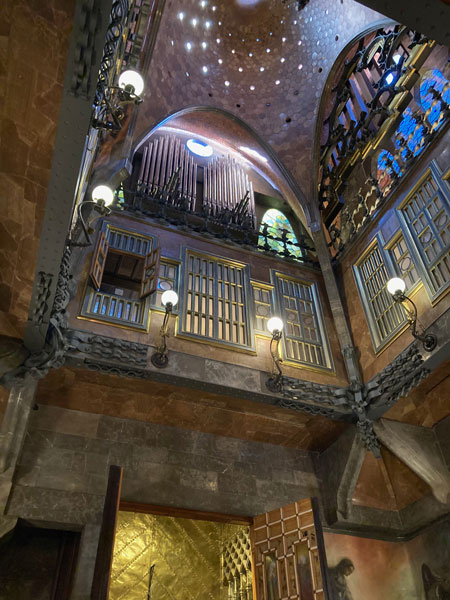
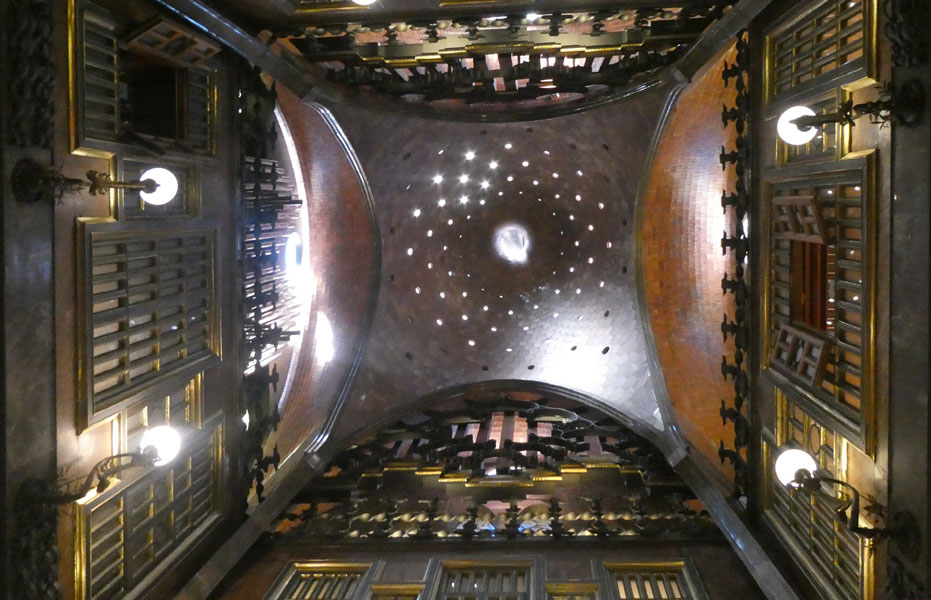
The first photograph below shows the dining room with original furniture. This was off-limits during the tour. The next three are different views of the grand central area of the home. Doors on one wall here conceal an elaborate altar. When opened for services, the entire room became the family’s private chapel. Reaching up to the roof as the space does, the family was able to secretly view their guests from the above floors and make any “adjustments” they felt necessary before joining them below. And, in the evening, the domed ceiling could be lit from behind to simulate a star-filled sky.
Rooftop:
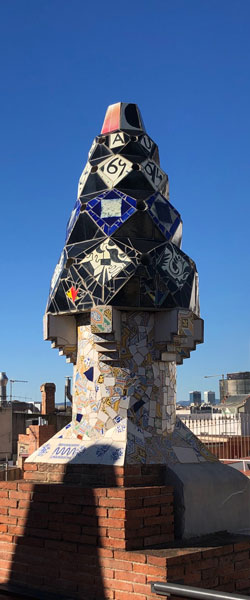
The Palau is famed for its many distinctive chimneys designed by Gaudi. There are more than 20 of them, with some for clearing out smoke while others provided fresh air ventilation within. Being exposed to the elements for over one hundred years has taken its toll on these iconic fixtures, but restoration has allowed this unique assemblage to continue amazing rooftop visitors. Some are still mostly original. Others have been restored with mostly original material . And those that were beyond restoration have been rebuilt anew using the special mosaic design technique called Trencar (“to break” in Catalan) that was pioneered by Gaudi.
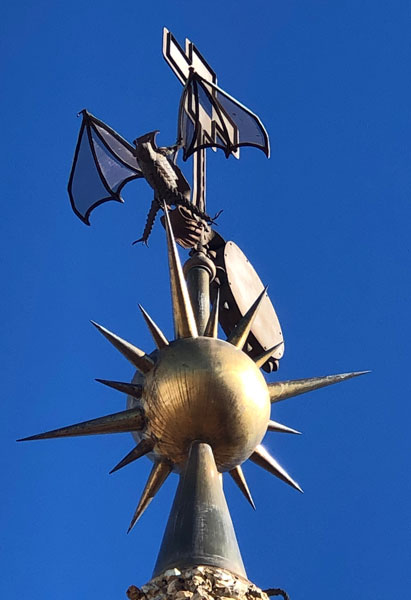
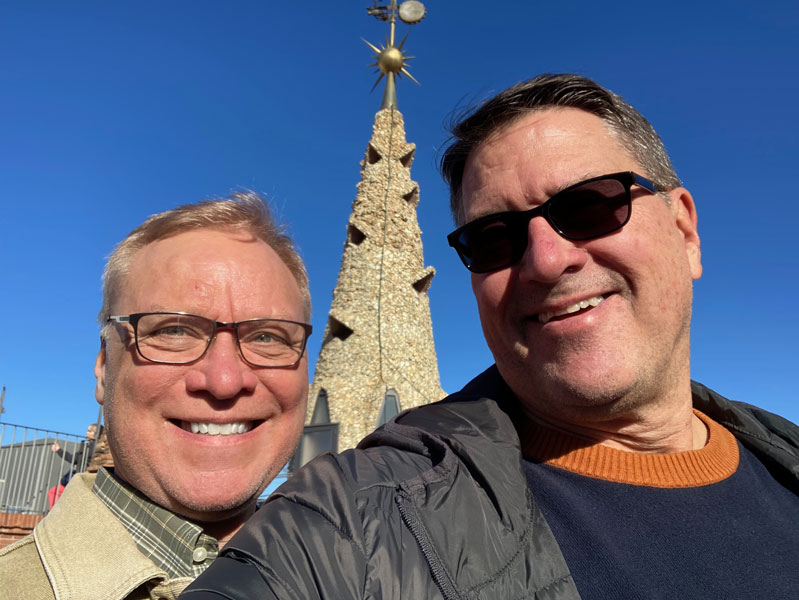
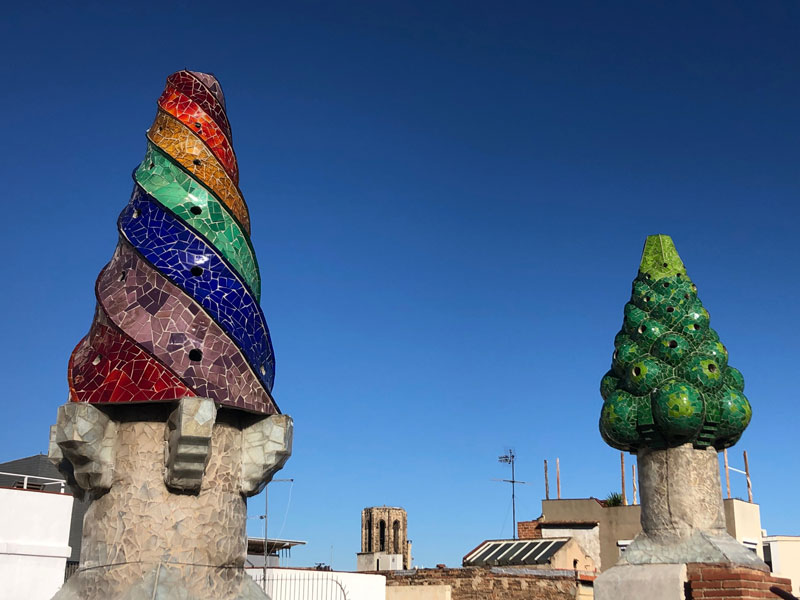
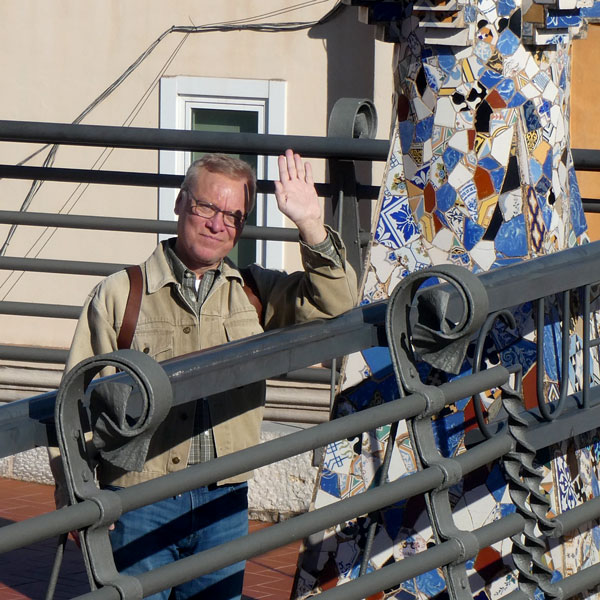
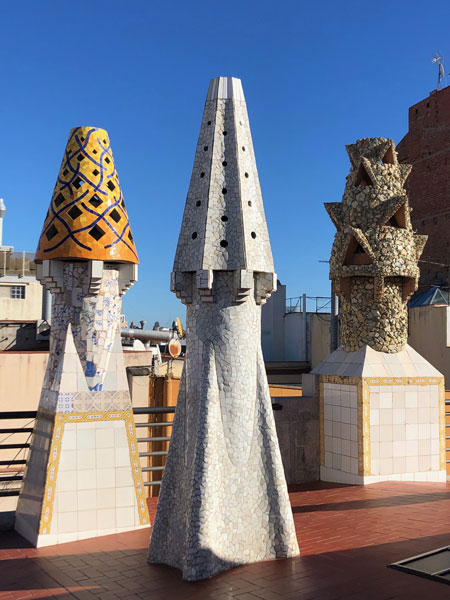
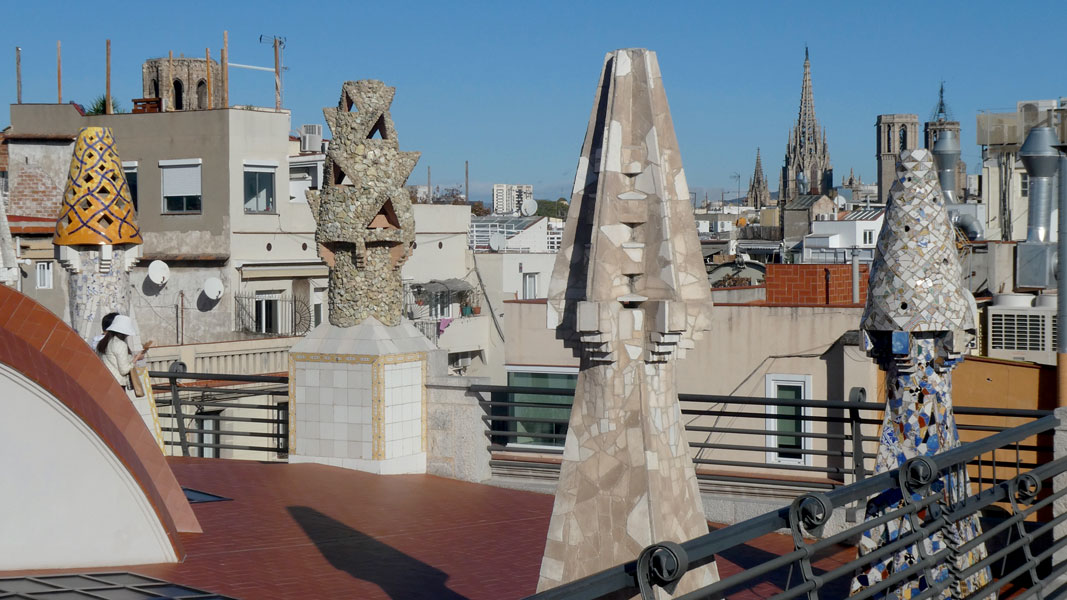
After touring the palace, we crossed Las Ramblas from the El Raval neighborhood to the Barri Gòtic (the Gothic Quarter) where we did a bit of rambling.
The Old City
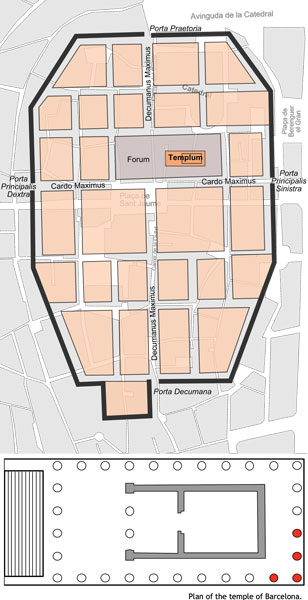
One of my historic objectives–as well as another Merlí: Sempere Aude filming site–was to find the remnants of the Roman Temple of Augustus. These columns (shown in red on the right) were once part of the perimeter columns of a great Roman temple across from the Roman forum in ancient Barcelona. Now, they have been repurposed into the structure of other buildings and can be seen from a tiny courtyard tucked away near the cathedral. This is one of several historical sites managed by the Barcelona History Museum.
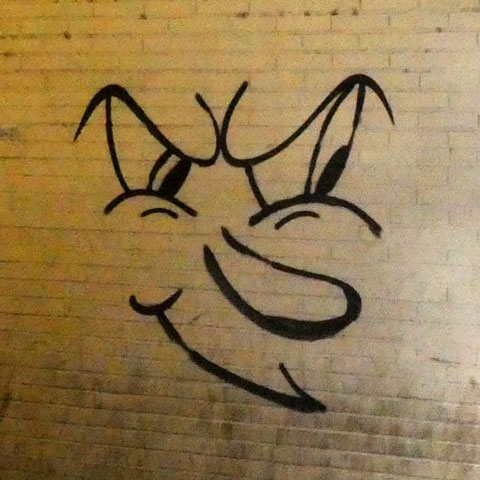
| In Merlí: Sapere Aude, the lower square window belonged to an apartment that was shared by several students. Because the building’s door buzzer was broken, one had to come here and yell up…and whoever was home would throw down the keys! Interesting way of incorporating a Barcelona landmark. |
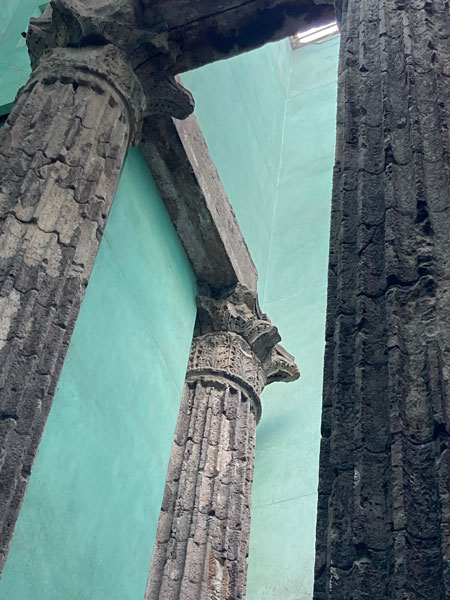
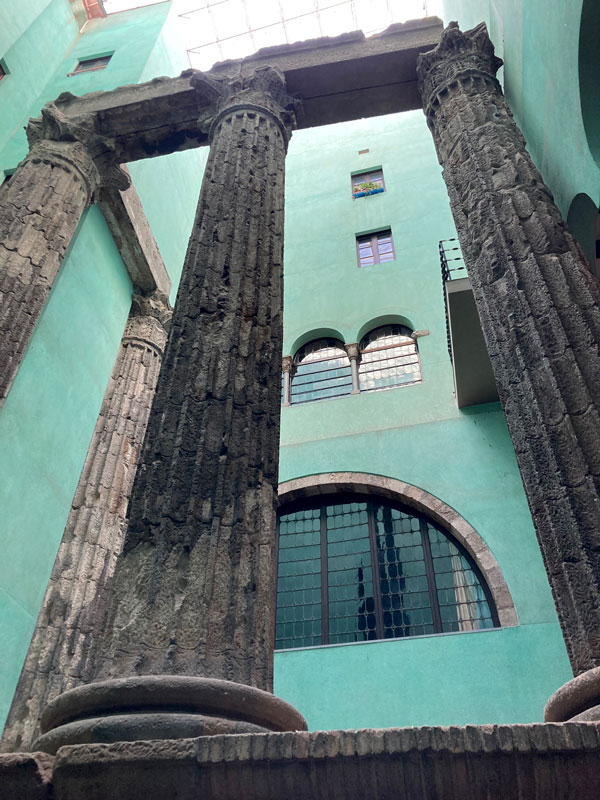
After leaving the temple, I thought we might be able to tour the Barcelona Cathedral. However, negotiating the crowds to locate the ticketing area was just exhausting so I put that on hold. Instead, we found ourselves face-to-face with La Fira de Santa Lucia, the original Barcelona Christmas market with its rows of booths hawking holiday cheer stretched out in both directions from the cathedral’s front door.
From our list of “musts”, this was our chance to find two souvenir ornaments I was jonesin’ for from this trip: the Caganer (“The Pooper”) and El Caga Tió (the “pooping log”). Both are quintessentially Catalonian.
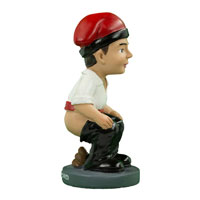
The Caganer is a ubiquitous figure in every Nativity scene in Catalonia and his “end product” represents the fertilization of the lands, providing a good harvest in the year to come.
Tió is an anthropomorphized log sporting a traditional Catalan red barretina (or peasant cap). Covered with a blanket to keep warm, children feed the Caga Tió a Christmas sweet every night until Christmas Eve. That evening, they softly beat the Caga Tió with a stick while singing:
“Caga tió, caga torró, avellanes i mató,
si no cagues bé et daré un cop de bastó. Caga tió!”*
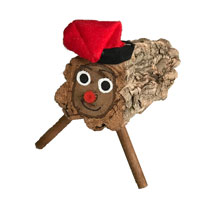
Then, they reach under the Caga Tió’s blanket to find gifts and treats. (The Poop!)
Christmas in Catalonia leans a little to the scatological, I’d say.
So, returning to the Christmas market itself: the holiday markets here are different from the more widely known European (read: Germanic) Christmas markets that tourists flock to from river cruise ships. Those tend to be a mix of gifts and food…with an emphasis on the food. Here in Barcelona, they tend to be more of a market for Christmas paraphernalia, especially Nativity scenes…or villages, as the case may be. From traditional single-family mangers to elaborate electrified and motorized full-on Bethlehems, Barcelonians love their holiday “play” houses. And at this holiday market, I’m seeing one booth after another displaying tiers and tiers of Nativity figurines, both the sacred and the profane, while still others specialize in the structures and decorative accoutrement to complete these “deú”-ramas.
Today, we priced the Caganer (from caganer.com!)…but I only bought a small–about 3″ in length–wood Caga Tió with big expressive eyes and his tongue sticking out.
After making our way through the market, we found ourselves close to the Mercat de Santa Caterina…and beginning to get hungry. We entered the market in search of a nice place to dine, be it tapas or not. The crowded luncheon spots, however, meant that it wasn’t gonna happen here today, so we started walking to the El Born district and the Picasso Museum where we had timed-entry tickets for 3:00 PM
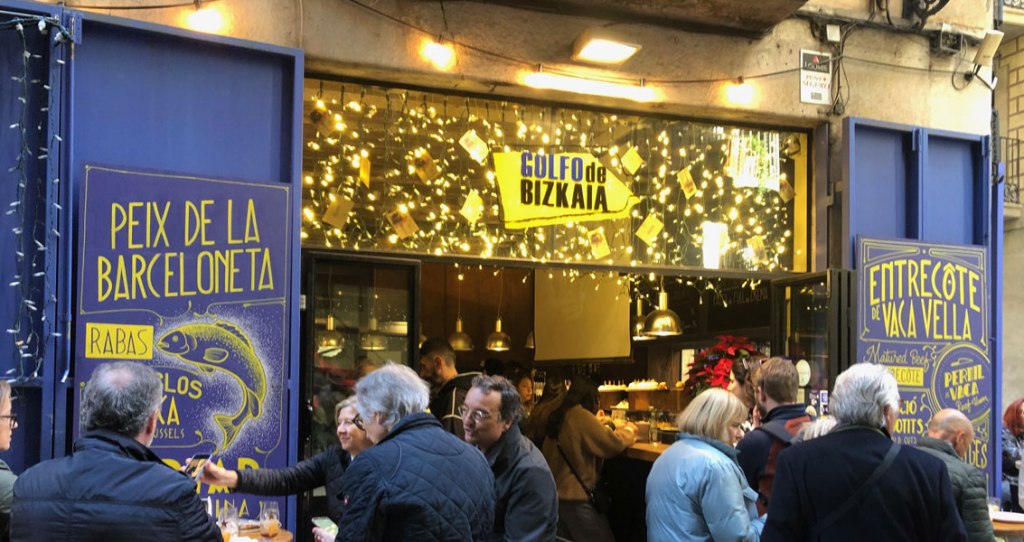
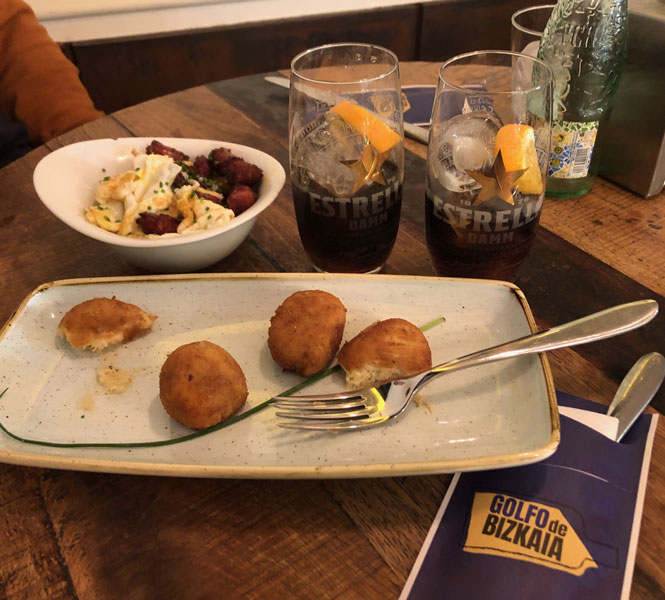
We eventually happened on the Gulfo de Bizkaia tapas bar where we ate our lunch. This is also where I realized we didn’t quite have a proper handle on tapas bar etiquette.
We were seated at a high-top table with a pretty commanding view of the restaurant’s interior including the bar seating (There were two chairs bar-side, both occupied) and the other tables around us. It took a while for someone to take our order. But, in the meantime, we observed. We saw people plating their own food right from the dishes displayed atop the bar. Then, someone would emerge from the kitchen with a food item and go around from table to table, offering it to the diners. We were approached once…didn’t understand what was said to us…waived her off…and were not approached again for several times thereafter when something else new was brought out.
Eventually, a young guy who hadn’t experienced our cursory dismissal earlier approached us and we were able to try this new offering. But afterwards, I still felt that we were just sideline spectators in an elaborate (and delicious) dinner dance, the steps of which we were completely ignorant.
After lunch, we made our requisite stop at an Aldi’s store. It’s been years but that hasn’t diminished Rob’s hope to, once again, find Aldi’s own brand of armagnac on the shelves. It has become our Holy Grail of European travel.
The Picasso Museum
We reached the Picasso Museum shortly before our scheduled time. There were a few back-and-forths between getting lockers, using facilities, verifying tickets and finding the correct entrance, but we eventually entered into Pablo’s world…with a lot of Joan Miró thrown in.
There was a curated joint exhibition of Miró’s and Picasso’s works sponsored by this museum and the Fundació Joan Miró, also in Barcelona. Joan and Pablo maintained a close friendship for more than fifty years, shared many transcendental moments in their careers, and both chose Barcelona to house their bequeathed work in monographic art centers.
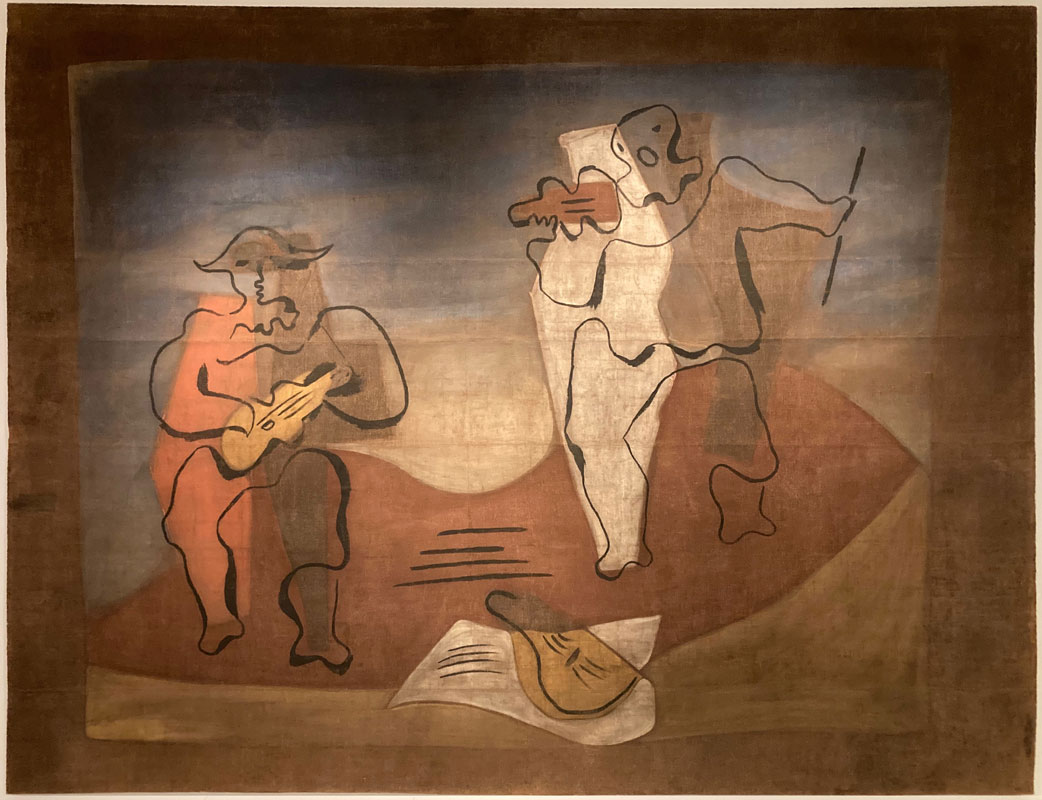
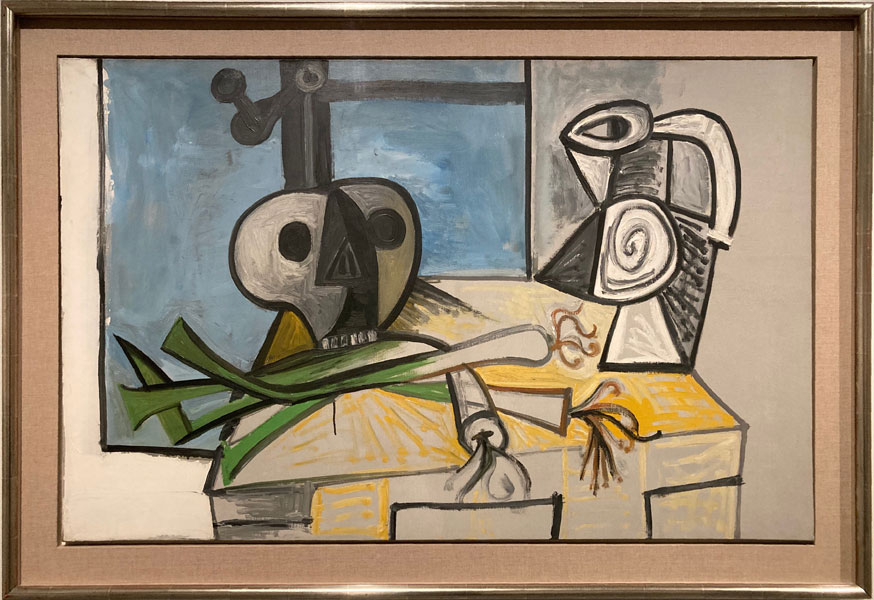
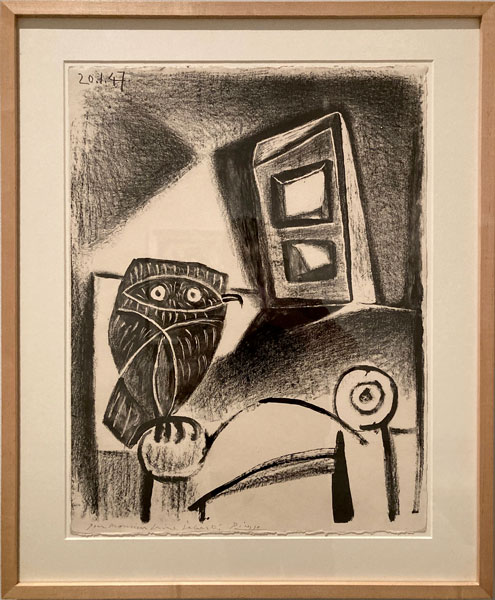
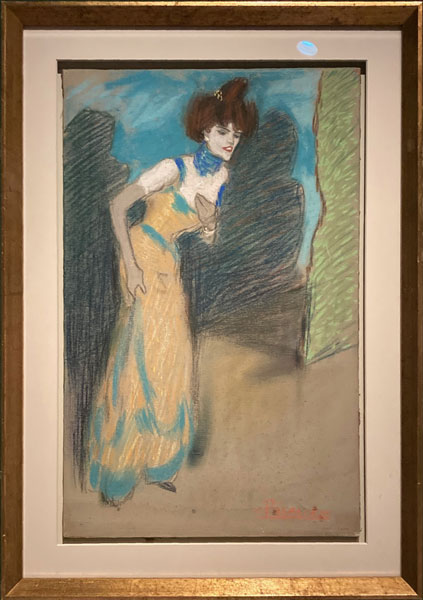
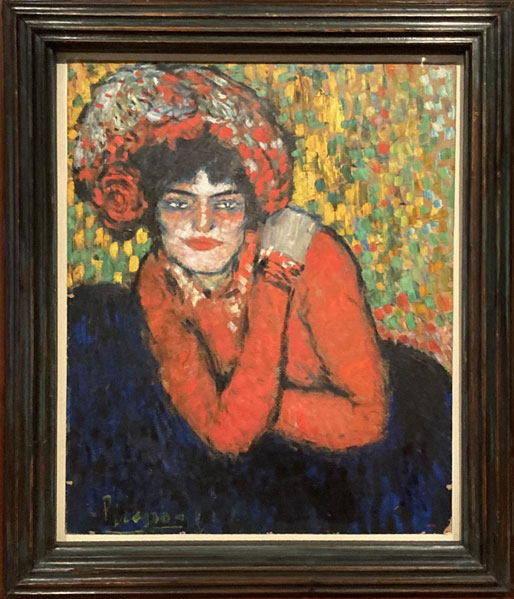
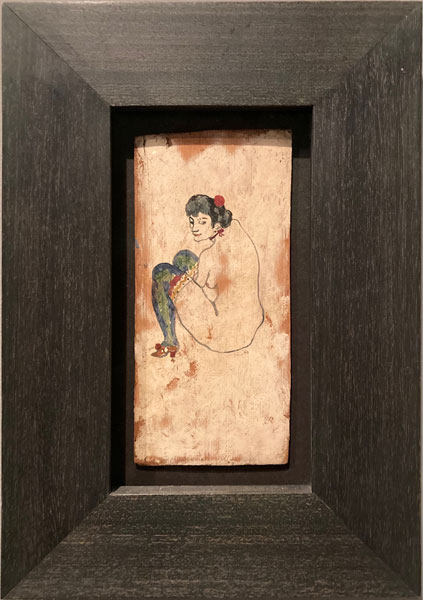
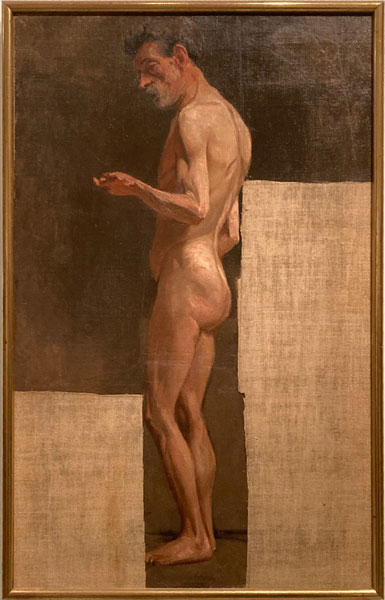
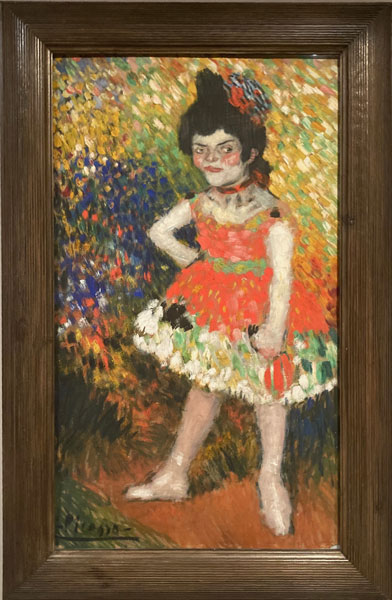
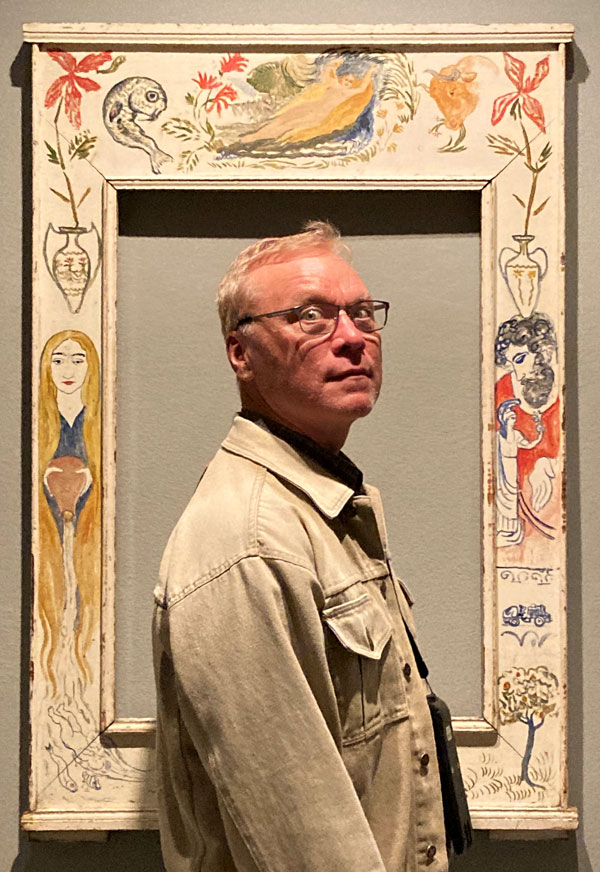
Once we had worked our way through this joint exhibition, we were immersed solely in the work of Picasso himself. Starting with his early works, one can see his progression to the modern artist that comes to mind when his name is mentioned. The following works of art struck a chord with me…and I share them with you.
Some favorite Picasso works
Some naughty Picasso works
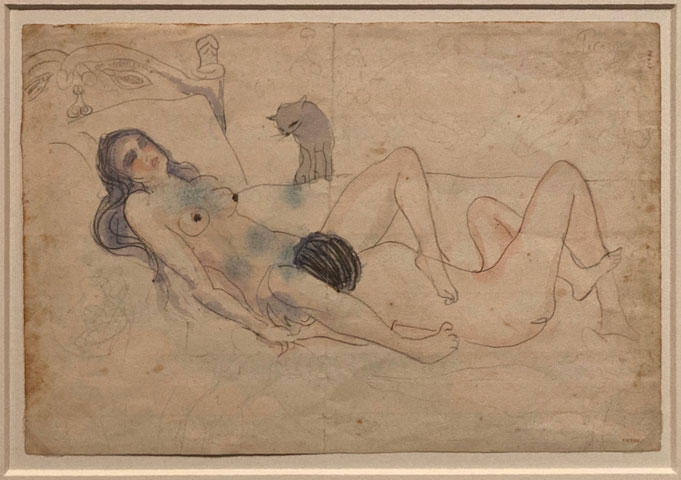
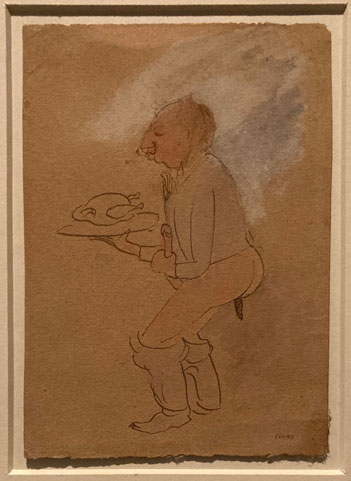
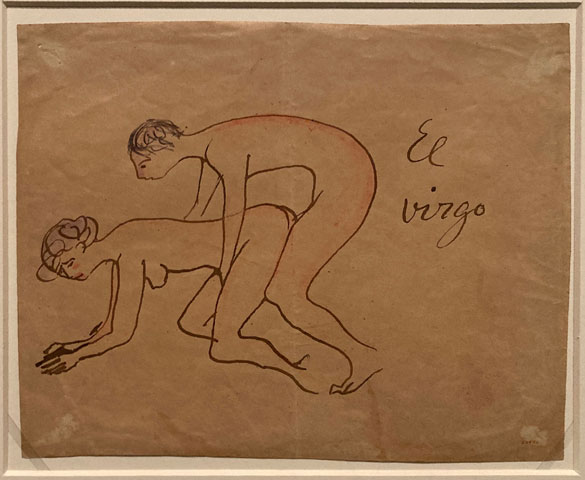
These caught me a little off guard…and not because they are particularly dirty. It may just be their specificity. Knowing this museum has more of his early works, I can’t help but attribute these to the erotic imaginings of a horny teenager…whatever actual age he was at the time. Oh, and I laughed. They amused me.
An unexpected result–some might say bonus–of our time spent at the Picasso Museum: I could remove the Fundació Joan Miró from our list of to-do’s. We’d had a hearty helping of his work today…and bypassing his museum would afford us more time in the Museu Nacional d’Art de Catalunya tomorrow. (Both are located up on Montjuic.)
It was fairly late when we reached the hotel for our after-afternoon siestas.
As I write this, I am reminded that it was Saturday night in Barcelona. For some, that’s Date Night. For us, it was our second evening of trying to stave off our hunger pangs so that we could do like the locals and have dinner after 9 PM.
We started exploring the Gaixample (the gay-borhood) for a watering hole to quaff a few amongst “our people.” The gay bar list I’d put together from the online travel duo, the Nomadic Boys, was proving to be a bit outdated, so we kept our eyes out for fluttering rainbow flags as we criss-crossed the gay village streets in search of a welcoming bar stool.
First try was a miss; it was closed for a private party. But we hit a home run with the Strass Bar. (Or maybe it was the New Strass–I was never quite sure which name was correct.) It was early enough for chat time with the bartender, an emigré named Jorge who was a fully-trained medical doctor…in Cuba. The drinks were served in very large glasses, mostly to accommodate the very large single ice cube that was used without sacrificing any of the expected alcohol.
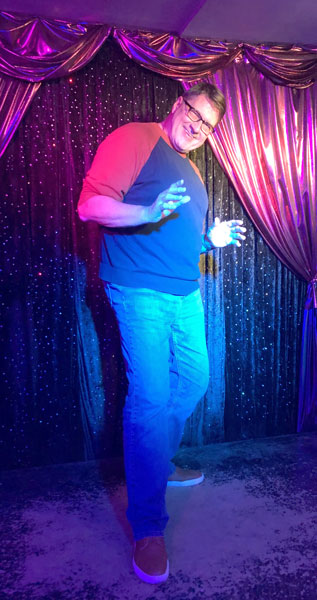
There was a holiday photo shoot–the left-most reindeer is Jorge–and I “took to the stage” for a quick pic well before the drag performances started.


The drag show wasn’t scheduled to begin until after midnight and it was @ 10:30 PM STD (Standard Time for Dinner), so we asked for local restaurant recommendations from Jorge. He suggested the BCN Bar, a nearby corner “diner” frequented by the fabulous set…including himself and other staff members of the Strass bar who arrived for dinner themselves about 15 minutes after we were seated.
With our meals eaten and our check paid, we headed back to New Strass for the midnight show. The crowd was mixed, lively and participatory. There was one patron in particular, a “Birthday Girl”, who was raucously celebrating her march to senility by repeatedly hogging the spotlight as only a bar hag can. It was interesting and a tad frustrating watching a drag show, which usually consists of equal parts lip-synching and caustic dialogue, when you don’t understand the language.
As the crowd increased in size, our ability to see the stage diminished until, with one last, great swallow, we drained our cocktails and exited the bar, ending another day in Barcelona.
*Shit, log, shit nougats, hazelnuts and mató cheese, if you don’t shit well, I’ll hit you with a stick, shit, log!
21,916S/10.0M
 Barcelona