
The day began, as usual, with breakfast at the hotel. In a world of tapas (i.e. small plates), this is becoming our main meal of the day.
We set out on foot for Gaudi’s Park Güell…because I misread the directions. What I thought was a 25 minute walk was, in fact, a 25 minute drive. Walking to the Park would have taken an hour or more–and we were on the clock, having tickets for a 10:00 AM timed-entry walking tour.
“Taxi!”
When we were dropped off, with time to spare, we exhaled a resounding “Whew!” We had dodged a bullet this time. We were neither aware of nor prepared for the long uphill climb it would have taken to reach the entrance. Maybe we should have expected it since the failed real estate development that eventually became Park Güell was built into the slopes of a mountain. But, again, we were naive tourists.
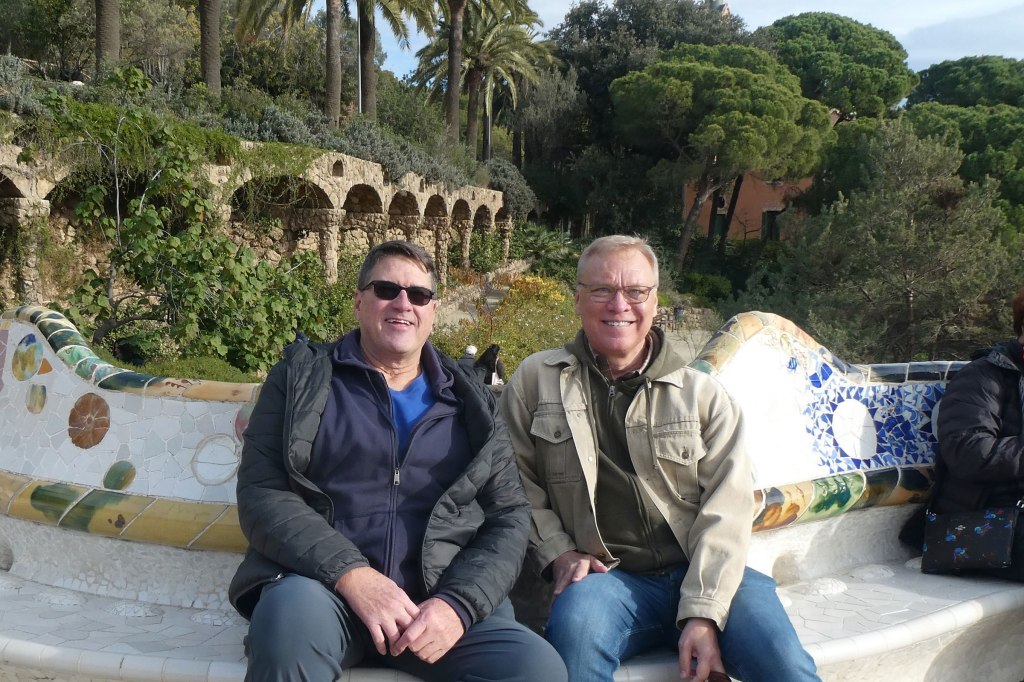
A quick summary of the park’s history: Señor Güell, one of if not THE richest man in Spain at the time, had seen first-hand how the well-to-do of London were moving out of the central city and into exclusive, planned developments away from the hustle and bustle. He sought the same for Barcelona’s moneyed gentry. Already having a working relationship with Antoni Gaudi, Güell hired the architect to design the entire complex on his hillside property.
Gaudi’s design included triangular-shaped plots for “approved” houses; serpentine access roads built on viaducts climbing the hillsides; promenades often lined with non-native palm trees; a large, open meeting plaza (with great views) for social interaction among the residents; and a columned market space, among others. Most of the communal assets were built. However, the design restrictions Gaudi imsisted upon to ensure his vision were immutable and considered too severe. These rules kept the wealthy, who were of a different mindset when it came to “their” properties, from buying into the project, dooming the entire enterprise to failure. Only one spec house–occupied for a number of years by Gaudi himself– and two gatekeeper cottages were built for the project. And only one residential plot was actually bought and developed…by Güell’s lawyer.
Our tour group was to meet at the eastern end of the park near the entrance to the monumental zone (where admission tickets are required.) From this starting point, the guide led us on a journey from the natural to the fanciful.
The Viaducts, Arches & Pathways
Gaudi’s sensibilities were very attuned to the natural settings he was working in and with. He tried to preserve what nature had wrought while providing for the needs of the development. Because the planned housing units required access roads, there were several arched viaducts constructed of local stone to support said roadways. And threading throughout, he placed pedestrian pathways and steps to encourage foot traffic with seating and scenic vistas.
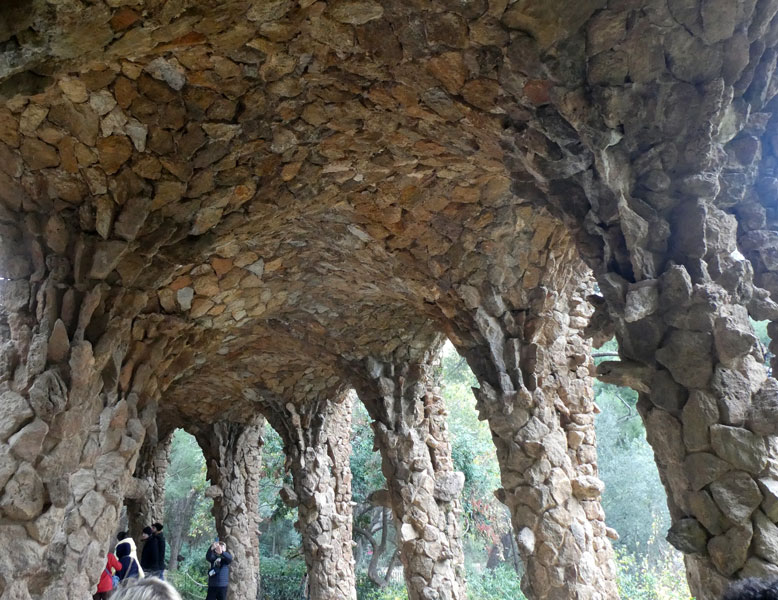
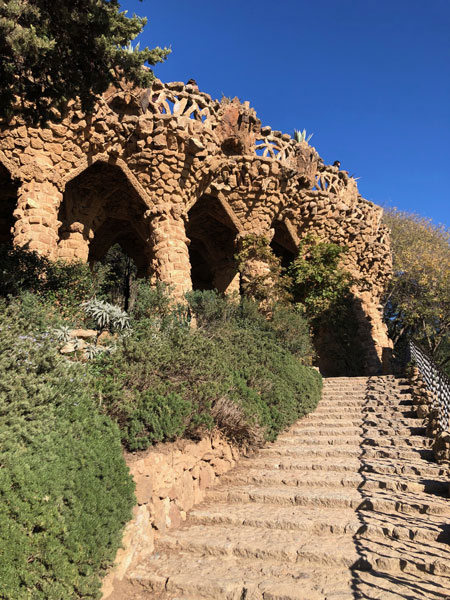
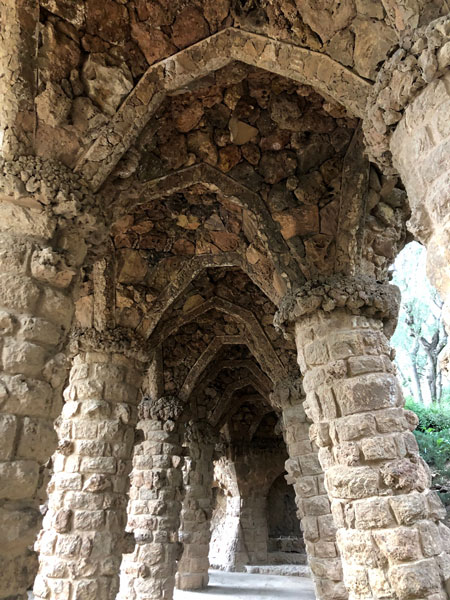
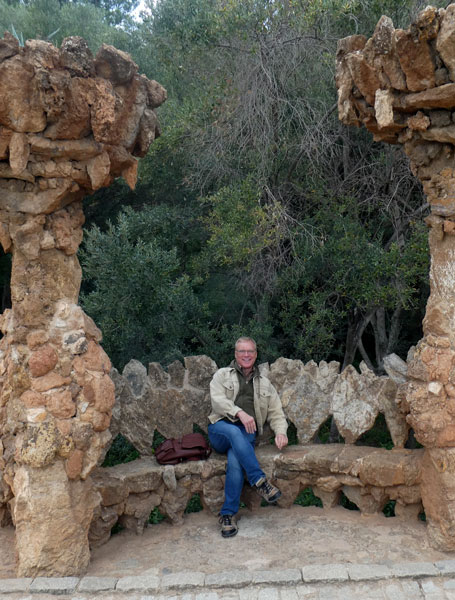
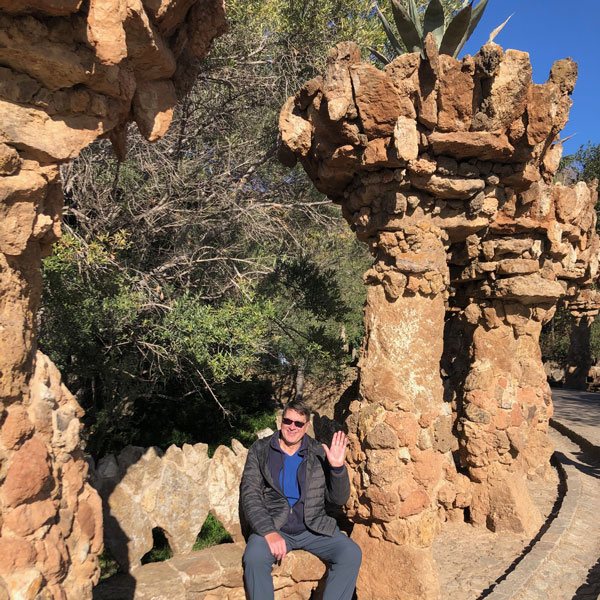
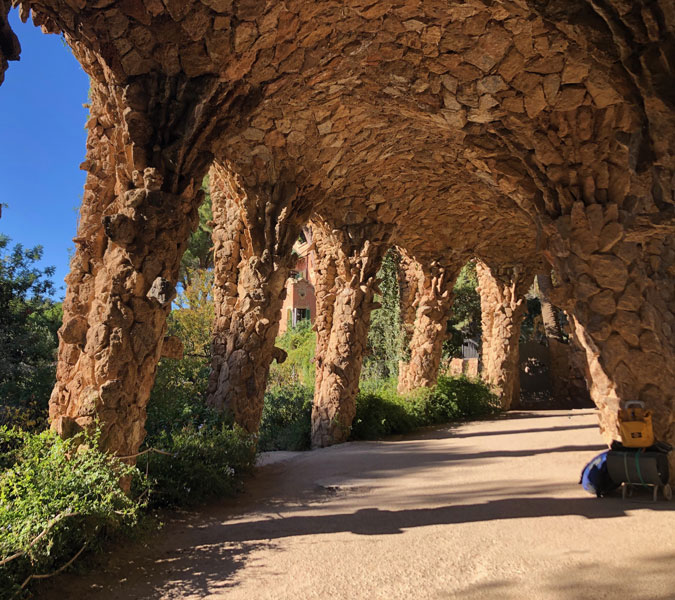
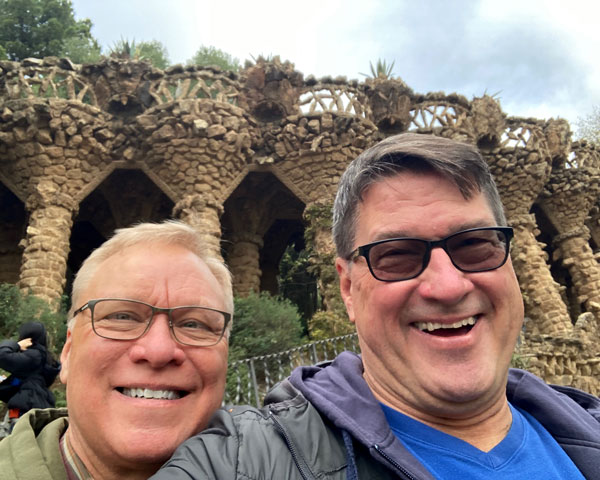
After a narrated walk up, down and through all the “natural” structures, we arrived at the planned grand entrance for the Park, where Gaudi, in his most fanciful, shined brightest.
The Hypostyle Room & Nature Square
We have reached the Hypostyle Room. With influences of both Greek and church architecture, the space was also designed to be used as a marketplace for the estate. For that reason, there are white porcelain tile “aprons” wrapped around the base of each column for sanitary reasons. The tile would be easier to keep clean.
Interestingly, most of the interior columns are not structural. The perimeter columns and wall support the roof. The interior columns contain conduits to carry collected rainwater from the plaza above to an underground cistern. This water was once used to feed the tiered fountains that lead down to the main gate.
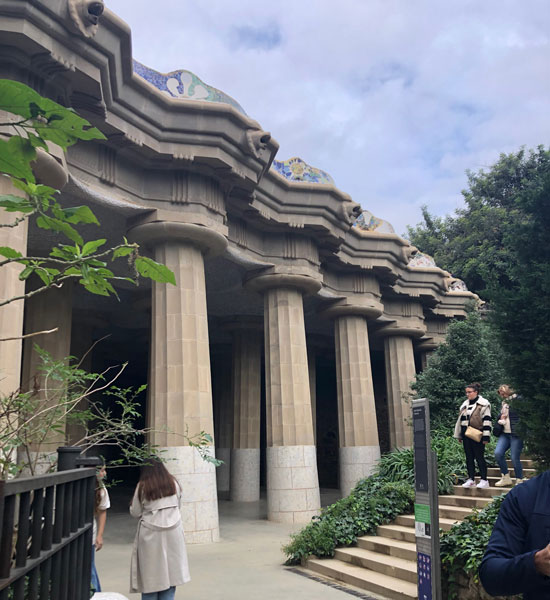
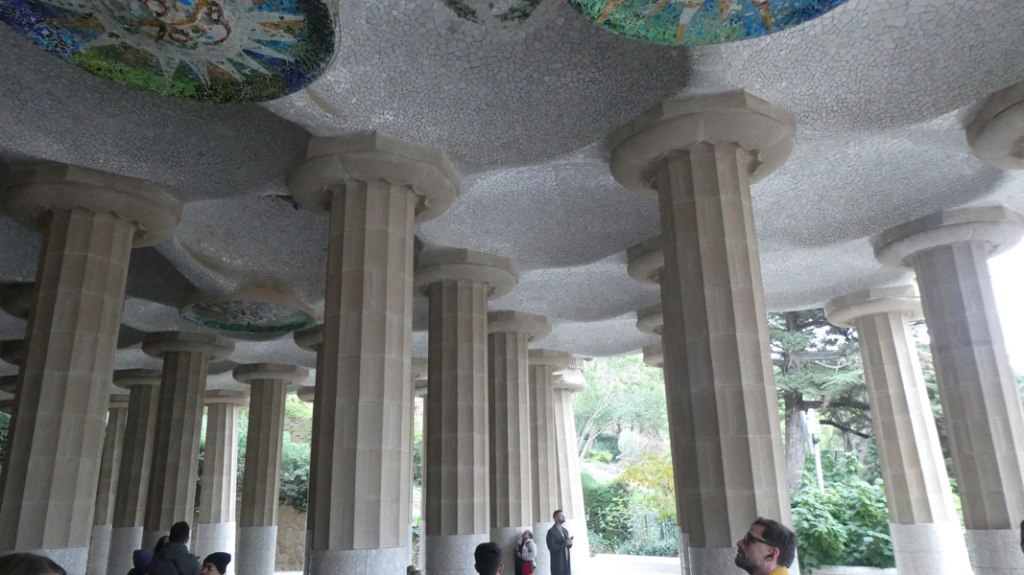
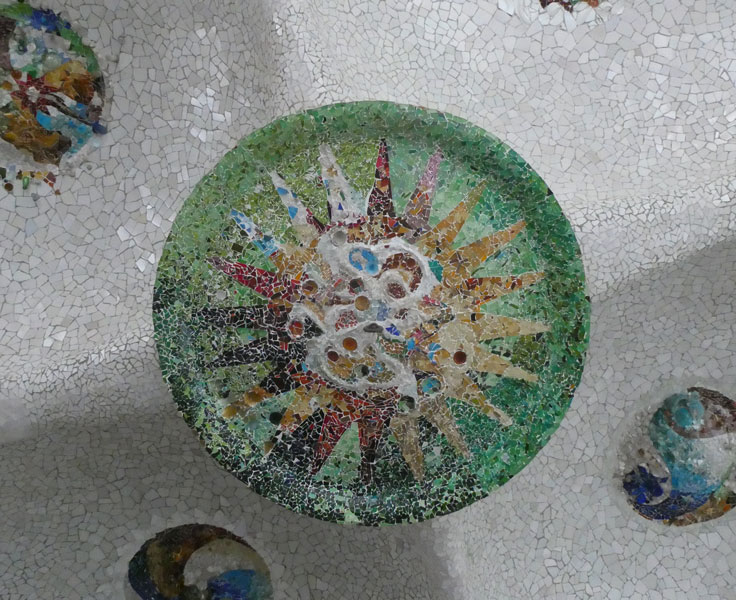
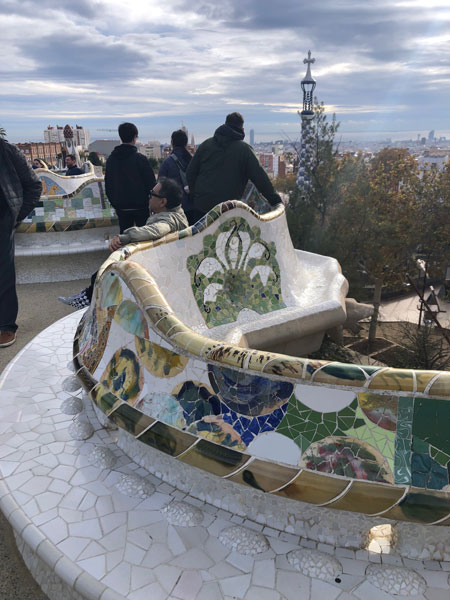
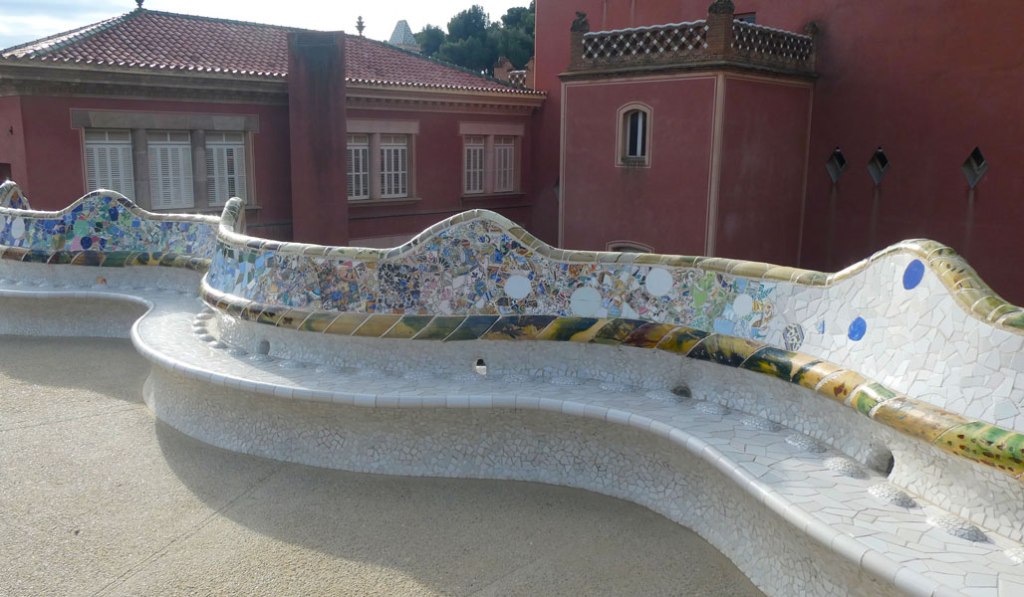
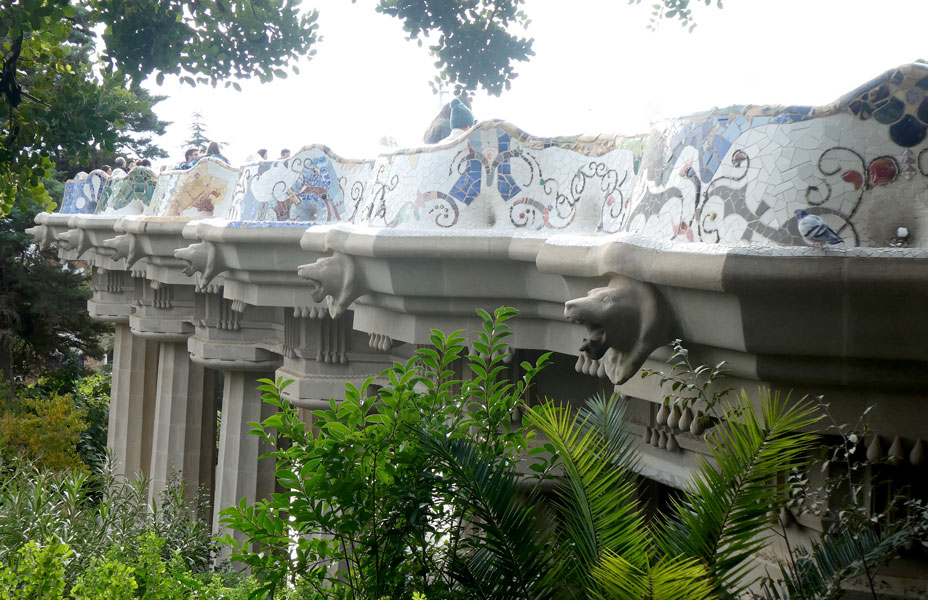
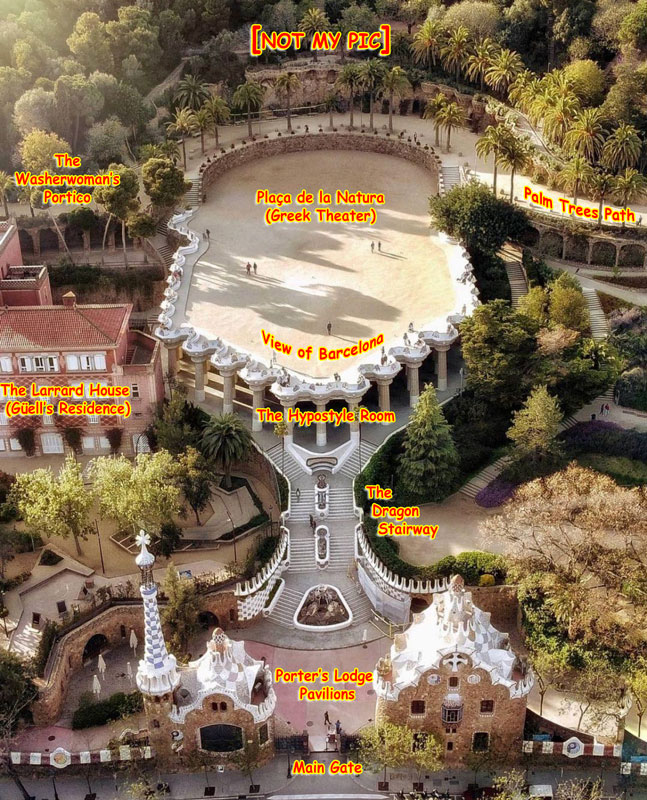
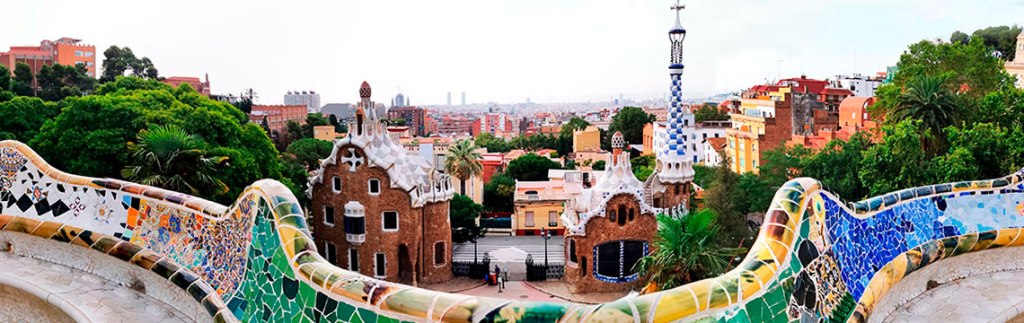
The large esplanade–originally called the Greek Theatre but now known as Plaça de la Natura (Nature Square)–is the roof for the Hypostyle Room and probably the best known feature of the entire complex. The city-facing terrace is bordered on three sides by an undulating bench, covered with tile-shard mosaics, that acts as a balustrade. The serpentine shape was deliberate: it allowed seated individuals to see the faces of those persons sitting next to them and thus encourages conversation. Unfortunately, popularity comes with a price and the front of the plaza with the best views of Barcelona was swarming with tourists and influencers, posing and posting, and completely concealing the tiled wall & view. So, no pics from me. But the following image, from the Official Park Güell website, shows you what I cannot.
The Dragon Stairway & Porter’s Pavilions
Descending from the plaza and skirting the Hypostyle Room, we continued to the Dragon Stairway: a pair of grand staircases divided by a series of water features, the most famous of which is the dragon (or salamander) covered in colorful tile-shard mosaic.
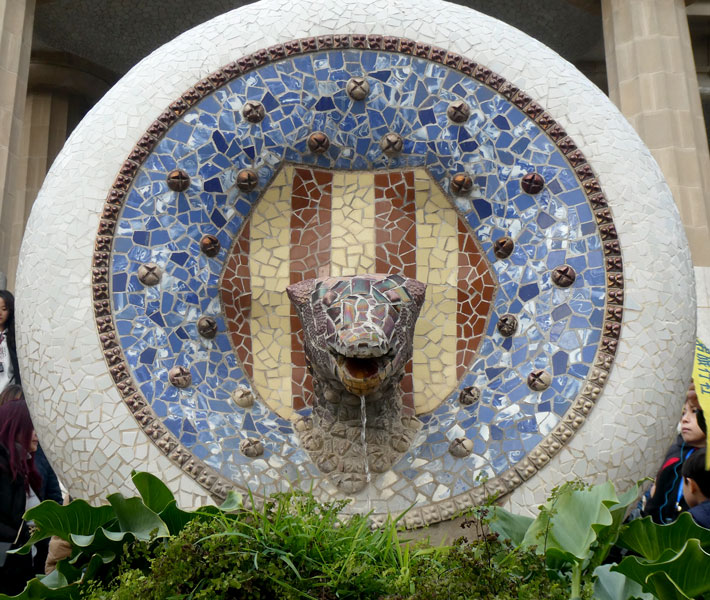
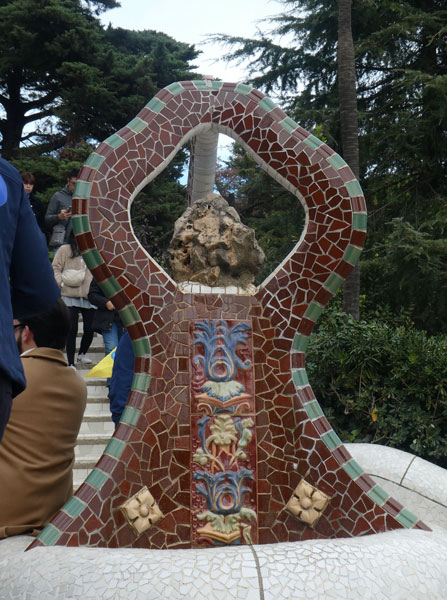
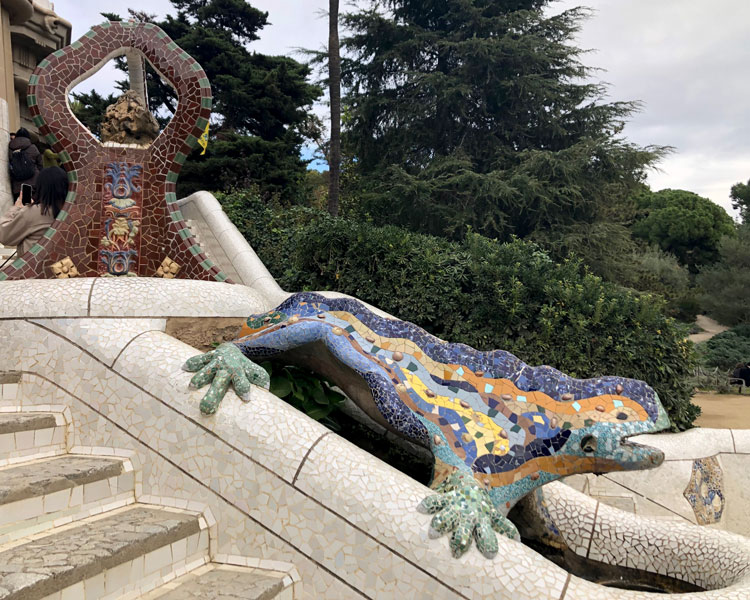
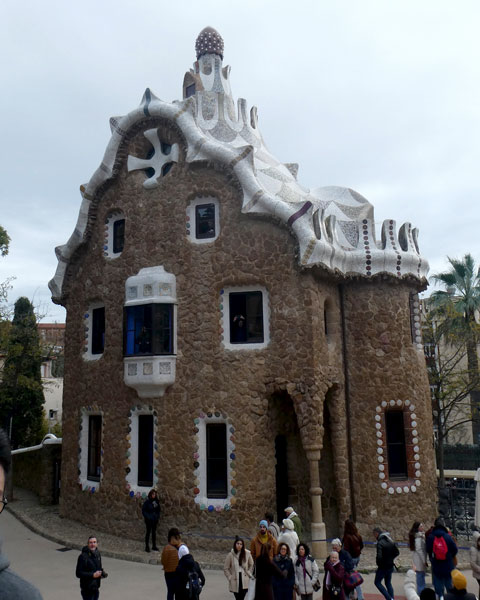
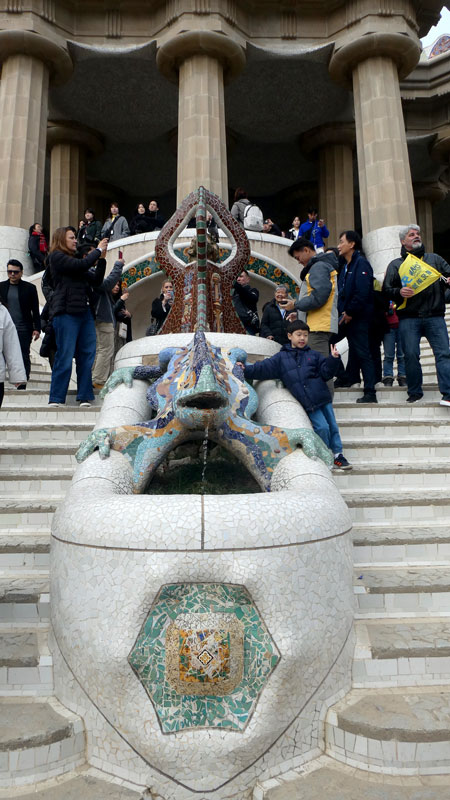
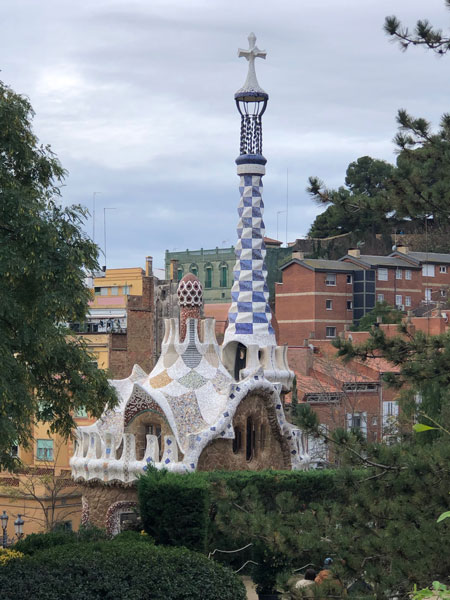
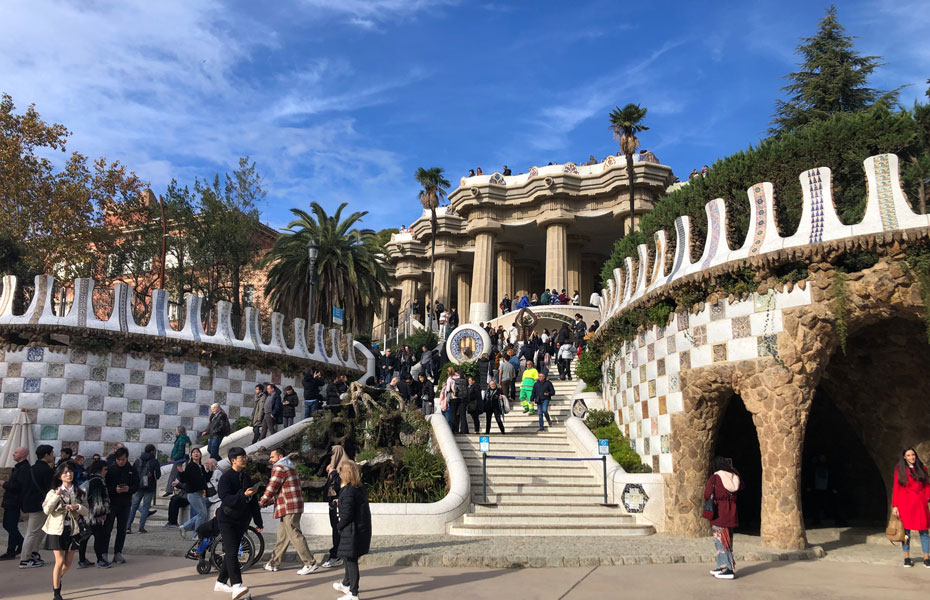
The open arch (right) was to be a covered turnaround for carriages bringing admitted guests to Park Güell.
Leaving the park through its formal gated entrance, we descended (yes, it was downhill all the way) into a genuine Barcelona neighborhood in search of the nearest Metro stop. One obvious sign that this was a real city neighborhood was the abundance of elderly people moving through the streets, shopping at their local haunts and/or schmoozing with known passers-by — something you rarely find in the more touristy areas.
We were able to check off two culinary desires (kinda) as we walked the street: 1) A restaurant was advertising churros and chocolate on a sandwich board sign. “Eureka!” we thought as we seated ourselves and placed our order with great anticipation. However, they only lived up to 50% of their claim: the churros were fresh and quite tasty. But what should have been melted chocolate for dipping was anything but. It was, in fact, a cup of plain, drinkable hot cocoa. 😞😞 2) After the churro disappointment, we came upon a bakery carrying xuxo de crema. This time, the pastry was incredible. And the filling was delicious as well, albeit a bit short on quantity.
Next stop? The Sagrada Familia. Yes, like moths to a flame, we were drawn back to the basilica to see how it was progressing on its slow crawl to completion. As I wrote earlier, it’s been five years since we toured the building.
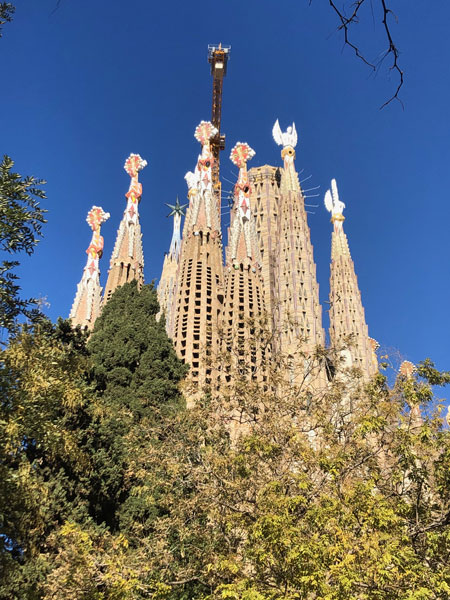
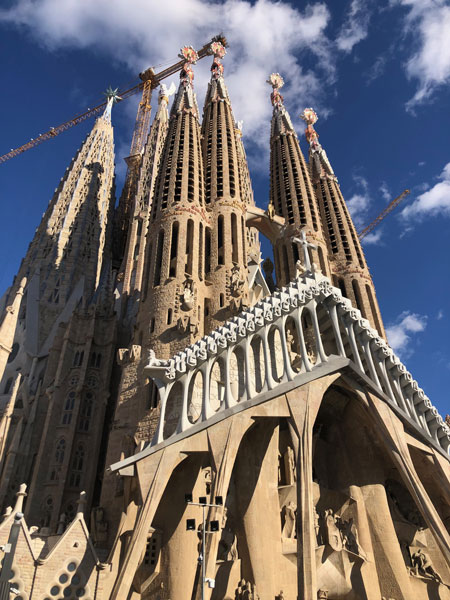
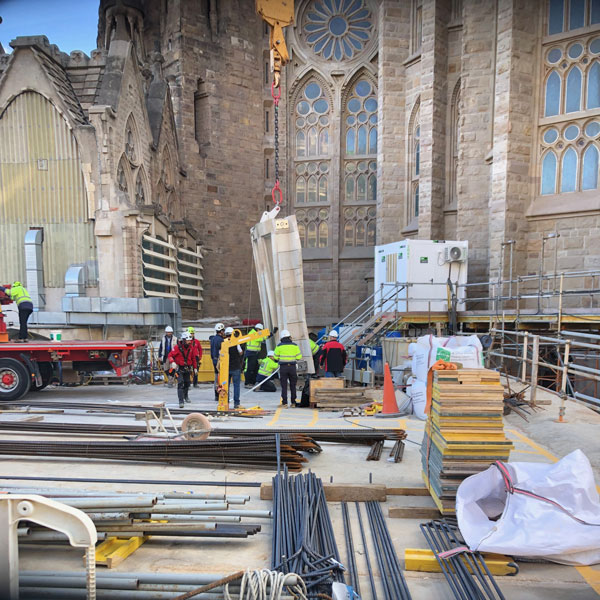
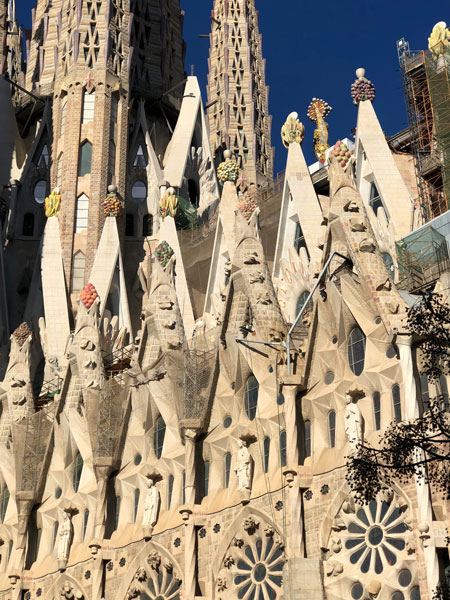
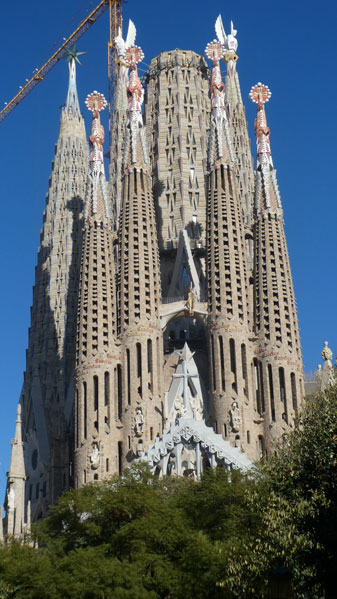
This time, we walked the perimeter, heads up, admiring the intricate and often colorful work on the towers. (Also, the last time, it was cloudy and drizzling. Today, it was sunny and bright…like Christmas itself!) An added bonus was the Christmas market here where I purchased our el caganer ornament: the Pooper. Huzzah!
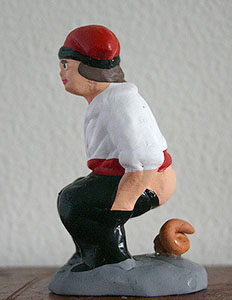
On our way back to the hotel, we stopped in a tapas bar around the corner for a vermouth and a couple of plates. Then, as every previous day, it was siesta time.
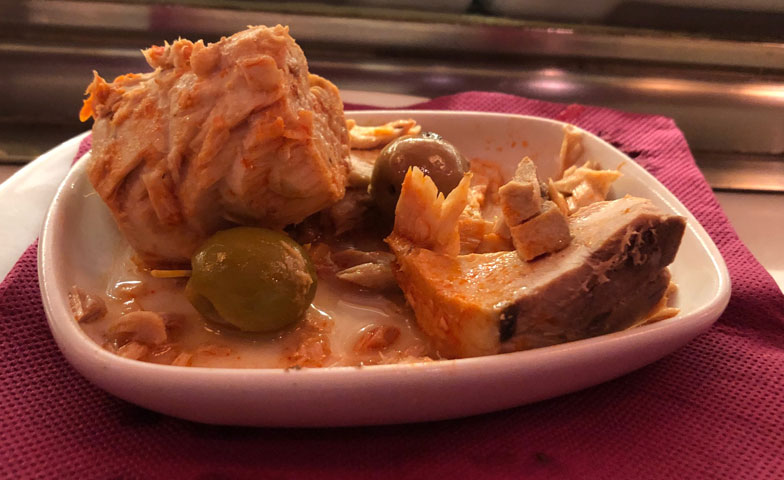
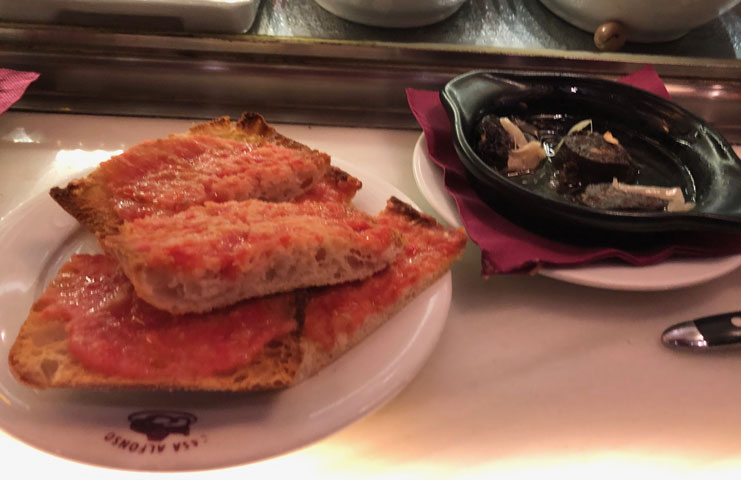
So simple yet so delicious
Our evening excursion was to the Recinte Modernista Sant Pau for its seasonal Els Llums de Sant Pau Christmas Garden. Built between 1905 and 1930, the complex was designed by Modernisme architect Lluís Domènech i Montaner as a garden city for the sick. Operating as a public hospital until 2009, its pavilions were renovated and restored as a museum and cultural center, reopening in 2014.
Our timed entry was for 7:00 PM. While waiting in line to explore the extensive lighting displays set up throughout the gardens and buildings surrounding the central court, we were entertained with holiday-themed visual projections on the main building’s facade, which we had caught a passing glimpse of during the Christmas lighting bus tour the previous evening.
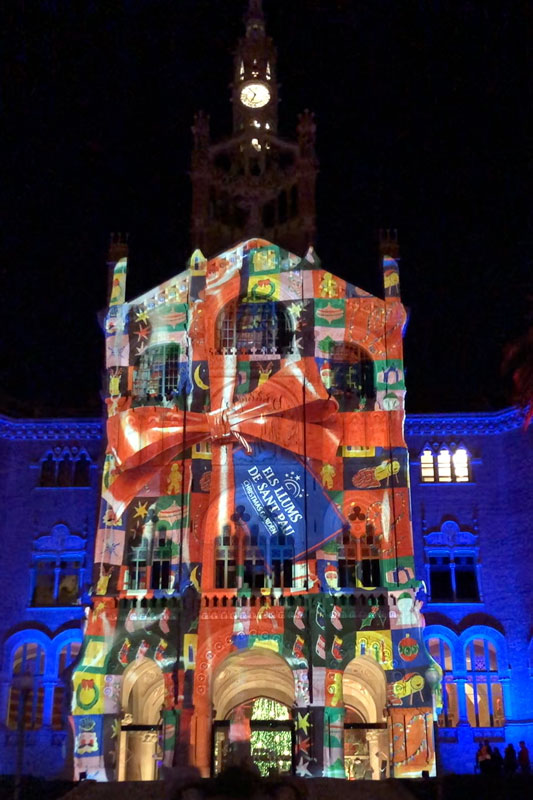
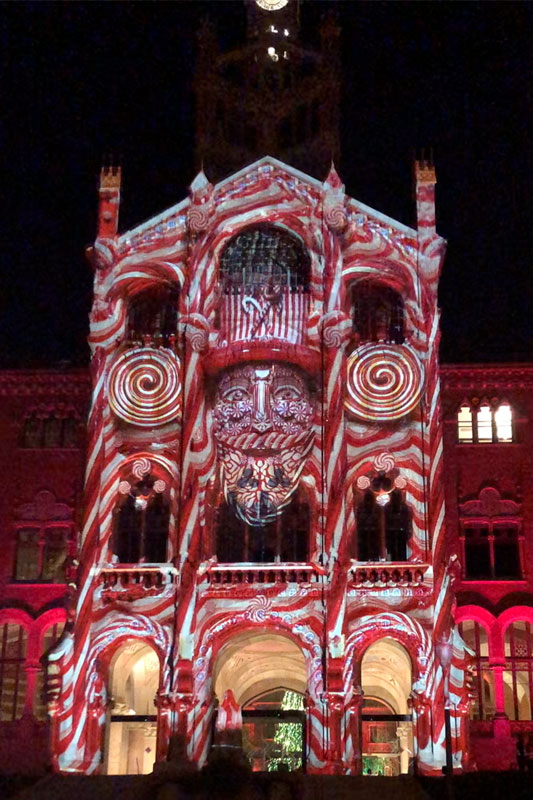
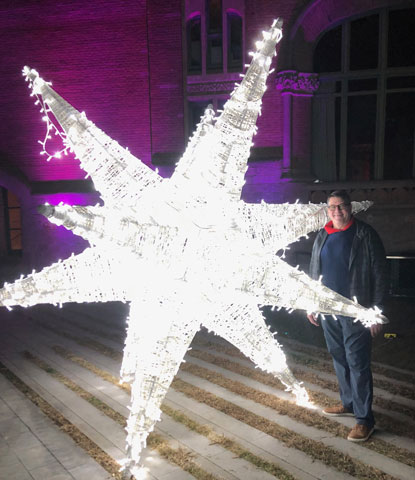
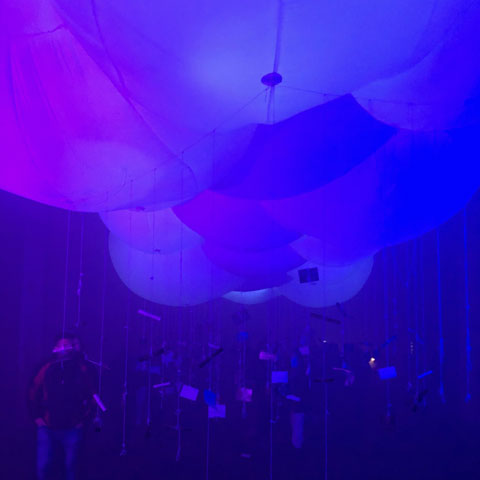
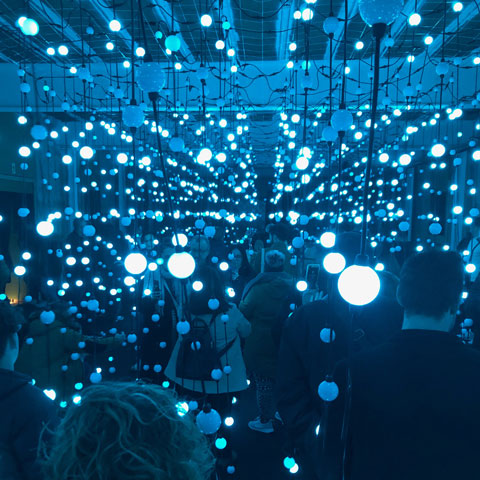
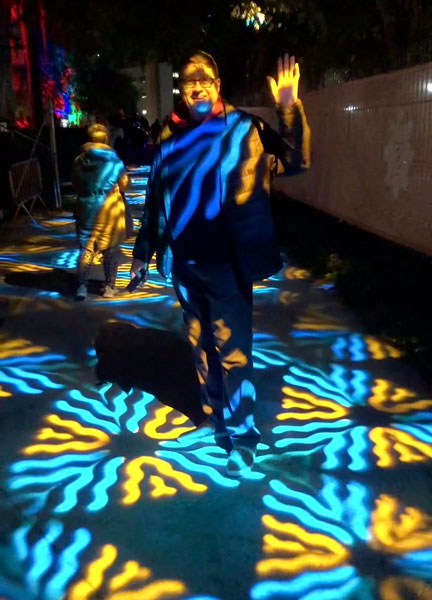
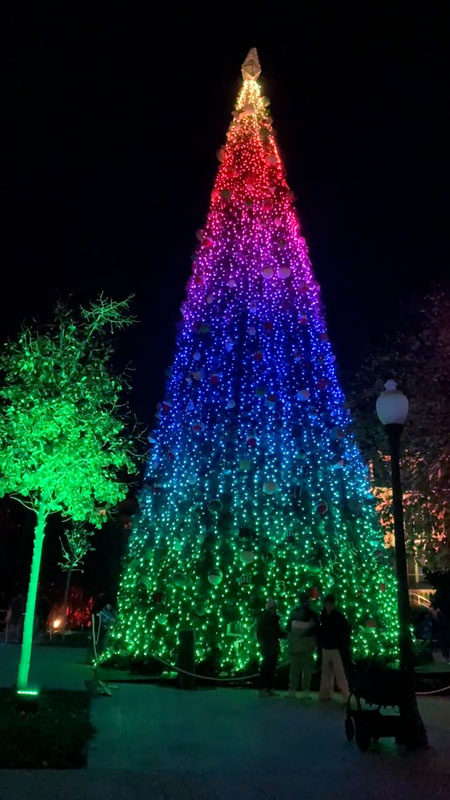
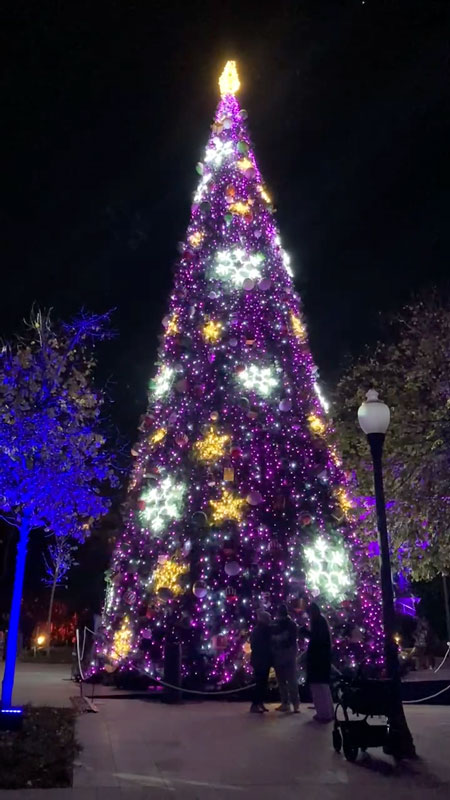
The most amazing lighting display of the whole setup was on the tall Christmas tree in the center of the plaza which cycled through its performance of programmed lighting every twenty minutes. Unfortunately, this travel blog is not set up for video clips but, the 3+ minute clip of the tree’s lighting show has been posted to both my Facebook and Instagram accounts.
The rest of the evening was fairly uneventful. Leaving Sant Pau, we walked the diagonal boulevard leading directly to Sagrada Familia. Here, we picked up the Metro and rode it to the far end of the Gaixample neighborhood in search of food and drink. We stopped at a rather innocuous gay bar called Barcelona Night. But the patrons were cliche-y and the bartender un-chatty, so it was two drinks and adieu.
We picked up a couple of empanadas for fuel on our walk back to the hotel.
22,847S/10.4M
 Barcelona